The landscape of B2B sales is undergoing a profound transformation, primarily driven by the integration of Artificial Intelligence (AI). Traditional, manual sales processes are being replaced by sophisticated AI-powered sales automation solutions that promise unprecedented efficiency, personalization, and growth. This shift isn’t just about minor efficiency gains; it’s about fundamentally reshaping how businesses identify, engage, and close deals. The goal is to move from reactive selling to proactive, data-driven revenue generation. This article explores how AI for B2B sales automation is redefining the sales function, offering a roadmap for organizations looking to leverage these AI sales tools for a competitive advantage.

Why B2B Sales Needs Automation?
The typical B2B sales cycle is complex, lengthy, and resource-intensive. Sales representatives spend a significant amount of time on non-selling activities, such as data entry, administrative tasks, and generic lead nurturing.
- Time Sink: Reps often dedicate more time to paperwork and CRM updates than to actual customer interaction.
- Inconsistent Personalization: Manual personalization is time-consuming and often lacks the depth required to resonate with modern B2B buyers.
- Inefficient Prospecting: Sifting through vast amounts of data to find the ideal customer profile (ICP) is a major bottleneck.
AI sales automation directly addresses these challenges by offloading repetitive tasks and enhancing human capabilities with data-driven insights.
You may be interested AI marketing automation

Key Applications of AI in B2B Sales Automation
AI is embedded across the entire B2B sales funnel. Here are the most critical applications:
Prospecting and Lead Generation
AI sales tools are revolutionizing the initial stages of the sales process.
- Intelligent Lead Scoring: AI models analyze historical data, firmographics, technographics, and behavioral signals to assign a score to each lead. This ensures sales teams focus their efforts on the highest-quality leads that are most likely to convert, maximizing the return on investment (ROI).

- Dynamic Prospect Identification: Tools utilize machine learning to proactively identify potential new accounts that match the ICP and exhibit specific buying signals, moving beyond simple static lists.
- Data Enrichment and Cleansing: AI automatically updates and cleanses CRM data, ensuring data accuracy is high—a critical foundation for effective sales operations.
Sales Engagement and Personalization
This is where Generative AI is having a transformative impact, enabling hyper-personalization at scale.
- Personalized Outreach Content: Generative AI can draft highly personalized emails, cold call scripts, and LinkedIn messages tailored to the prospect’s industry, role, and pain points. This significantly increases response rates compared to generic templates.
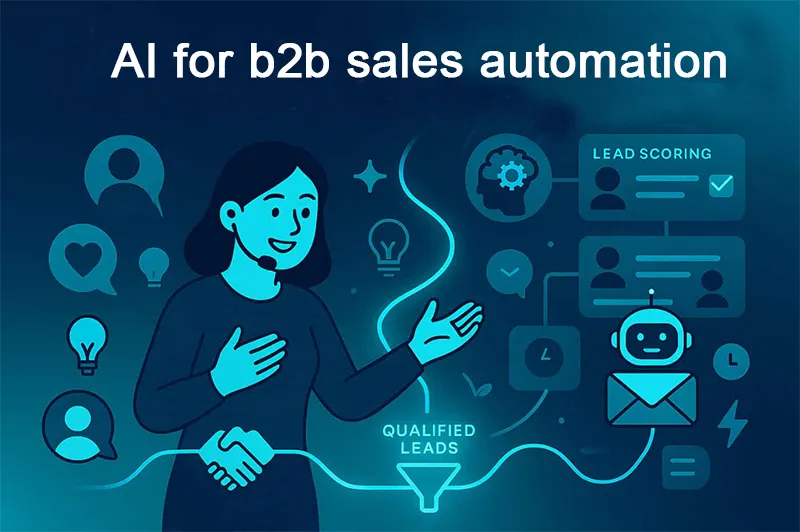
- AI-Powered Conversation Intelligence: Tools analyze calls and meetings (transcription, sentiment analysis, key topics) to provide real-time coaching to reps and identify successful sales tactics, ensuring reps follow the best practices.
- Automated Follow-up Sequences: AI schedules and executes optimized follow-up sequences based on the prospect’s interaction (e.g., email opens, website visits), ensuring no lead falls through the cracks.
You may be interested AI sales automation for wholesale distributorss
Deal Management and Forecasting
AI enhances the visibility and predictability of the sales pipeline.
- Sales Forecasting Accuracy: Machine learning algorithms analyze pipeline data, rep activity, and historical conversion rates to provide more accurate and reliable revenue forecasts than traditional manual methods.
- Risk Identification: AI flags deals that show signs of stalling or risk of loss (e.g., lack of engagement, competitor mentions) so sales managers can intervene proactively.
- Next-Best-Action Recommendations: The system guides the sales representative with data-backed suggestions on the next most impactful action to move a deal forward (e.g., “send case study X,” “schedule meeting Y”).
Benefits of Implementing AI for B2B Sales Automation
The benefits extend far beyond simple cost reduction.
You may be interested The Definitive Guide to the best ai sales tools for automation
| Benefit | Description | Key Metric Impacted |
| Increased Sales Productivity | Automating administrative tasks (data entry, scheduling, logging) allows reps to spend more time selling. | Rep Time Spent Selling (%) |
| Enhanced Revenue Growth | Focusing on the highest-potential leads and improving personalization leads to higher conversion rates and larger deal sizes. | Conversion Rates, Average Deal Size |
| Superior Customer Experience | Faster response times, highly relevant communications, and proactive service lead to happier, more loyal B2B customers. | Customer Satisfaction (CSAT), Retention Rate |
| Improved Decision-Making | Access to deep, real-time insights for better territory planning, resource allocation, and strategy. | Sales Forecasting Accuracy (%) |
Challenges and Considerations for Adoption
While the potential is vast, successful adoption of AI for B2B sales automation requires careful planning.
- Data Quality is Paramount: AI is only as good as the data it’s trained on. Organizations must prioritize data cleansing and governance before and during implementation.
- Integration Complexity: Ensuring new AI sales tools integrate seamlessly with existing CRM (e.g., Salesforce, HubSpot) and marketing stacks can be a technical challenge.
- Human-Machine Collaboration: The goal is not to replace the sales team but to augment them. Successful implementation requires training sales professionals to trust and effectively utilize their AI-powered assistants.
- Ethical Concerns: Ensuring transparency in how AI interacts with prospects and adhering to data privacy regulations (e.g., GDPR, CCPA) is non-negotiable.
You may be interested Why Marketing Automation Platforms Matter
How companies can prepare for a brave, new world
The wholesale integration of AI for B2B sales automation is not merely a technological upgrade; it is a fundamental shift in operational philosophy. To successfully navigate this “brave, new world” dominated by smart AI agents and data-driven insights, companies must strategically prepare their people, processes, and technology. This readiness is crucial for maximizing the ROI of AI sales tools and ensuring sustained revenue growth.
Data Governance and Infrastructure
The fuel for all AI sales tools is data. Without high-quality, clean, and accessible data, even the most sophisticated machine learning algorithms will fail.
- Prioritize Data Quality and Cleansing: Before adopting any major AI for B2B sales automation solution, companies must audit and cleanse their CRM data. Inaccurate or incomplete data leads to flawed predictive analytics and poor lead scoring. Establishing strict data governance policies is the first step.
- Centralized Data Repository: Ensure all customer interaction data—from the CRM to email logs, call recordings, and marketing automation platforms—flows into a unified, accessible data lake. This allows AI models to gain a holistic 360-degree view of the customer, which is essential for accurate forecasting and hyper-personalization powered by Generative AI.
- Security and Compliance: Given the sensitivity of B2B data, investment in robust security protocols and ensuring compliance with regulations like GDPR and CCPA is mandatory. Trust in the AI system begins with trust in data handling.
Re-Skilling and Cultural Transformation
The human element remains critical. AI for B2B sales automation augments, it does not replace, the sales representative.
- Shift Mindset from Selling to Strategizing: Sales managers must redefine the role of the sales representative. The new mandate is to move from manual administrative tasks to becoming strategic customer advisors. This involves leveraging AI insights to solve complex customer problems and build deep relationships, which AI agents cannot replicate.
- Invest in AI Literacy Training: Provide comprehensive training on how to use new AI sales tools effectively. This goes beyond button-clicking; it includes teaching reps how to interpret AI-powered recommendations (e.g., “Next-Best-Action”) and incorporate them into their daily workflow.
- Foster a Culture of Experimentation: Encourage sales teams to test and provide feedback on new AI features. A culture that embraces calculated risk and continuous improvement will be faster to adapt and gain a competitive edge.
You may be interested AI Workflow Automation: Transforming Business Processes

Process Mapping and Integration
Integrating AI requires a careful re-evaluation of existing sales processes to ensure seamless operation.
- Define Clear Automation Boundaries: Identify which parts of the sales process can be fully automated (e.g., data entry, initial qualification, automated follow-up scheduling) and which parts require human oversight (e.g., complex negotiation, relationship building with the ideal customer profile (ICP)).
- Pilot Programs and Phased Rollouts: Instead of a “big bang” rollout, implement AI solutions through targeted pilot programs. Start with a specific team or a particular stage of the funnel (e.g., lead scoring) to measure impact and iterate before scaling across the entire sales organization.
- API-First Integration Strategy: Ensure that new AI sales tools are selected based on their ability to integrate easily and robustly with the existing CRM and technology stack. Frictionless data flow between systems is vital for the AI to function correctly and avoid creating data silos.
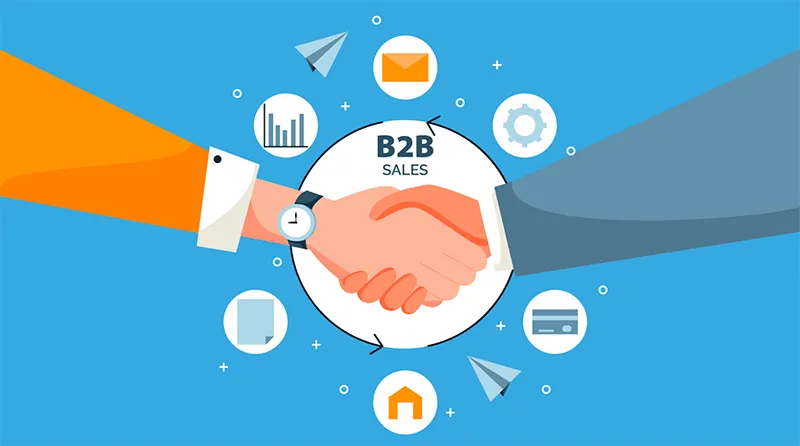
List Of 10+ Best B2B AI Sales Tools
In today’s highly competitive B2B landscape, Artificial Intelligence (AI) is no longer a luxury but a necessity for sales teams aiming to maximize efficiency, personalize outreach at scale, and accelerate pipeline growth. The following table provides a concise breakdown of the leading AI-powered sales tools transforming how businesses prospect, engage, and close deals.
These platforms leverage machine learning to automate tedious tasks, provide deep conversation intelligence, and deliver hyper-personalized insights, empowering sales professionals to focus on high-value activities and forge stronger buyer relationships.
You may be interested Marketing automation software: The Ultimate Guide (TOP 9+)

| No. | Tool | Highlighted Feature | Key Pros | Key Cons | Pricing Model (Example) |
| 1 | Persana AI | The Swiss Army Knife for B2B Sales, combining data from 75+ sources for hyper-personalized outreach (using PersanaVector™). | Higher match rate, unlimited team members (paid plans), real-time job change alerts. | Limited documented customer service, primary focus on small/medium businesses. | Starter: $68/mo; Growth: $151/mo. |
| 2 | Cognism | AI-powered lead generation with Diamond Data® (phone-verified mobile numbers) for high connect rates in US/Europe. | High data accuracy (80%), unrestricted data views/exports, GDPR/CCPA compliant. | Limited data coverage in certain Asian markets, strict 60-day cancellation notice. | Platinum & Diamond Packages (Unlimited data access). |
| 3 | Gong | Specialized Conversation Intelligence platform, trained on billions of sales interactions to deliver deep insights. | AI-powered insights for coaching, time-saving automation for note-taking, intuitive interface. | High base pricing (starting at $5000 annually), data access limitations for bulk exports. | Base Platform Fee + Per User Pricing ($1360 – $1600/user/yr). |
| 4 | Lavender | AI Email Assistant focused on doubling reply rates through real-time email coaching and personalization. | Increases pipeline velocity, helps avoid spam triggers, seamless Gmail/Outlook integration. | Limited to email optimization (not full sales cycle), occasional interface glitches. | Starter: $27/mo; Individual Pro: $45/mo; Team: $89/seat/mo. |
| 5 | HubSpot Sales Hub | Complete AI Sales Platform combining AI features with comprehensive CRM and sales automation. | User-friendly interface, comprehensive lead management, 24/7 customer support. | Significant price increase in 2024 plans, annual contract required for advanced tiers. | Starter: $20/mo/seat; Professional: $1,300/mo; Enterprise: $4,300/mo. |
| 6 | Overloop | Multi-Channel Sales Automation with 450M+ verified contacts and personalized outreach across channels. | Unlimited email accounts/campaigns, verified email addresses, seamless CRM integration. | Customer service limited to European time zones, occasional search function delays. | Includes 1,000 credits/user/mo + Unlimited users. |
| 7 | Fireflies | Meeting Intelligence that transcribes and analyzes conversations (95%+ accuracy) across 60+ languages. | High transcription accuracy, Smart Search for themes/action items, seamless calendar integration. | Free plan limits transcription to shared bot meetings, smart search unavailable in free tier. | Pro: $10/mo (billed annually); Business: $19/mo; Enterprise: $39/mo. |
| 8 | Crystal | AI-Powered Personality Insights (DISC-based) to adapt communication styles and tailor outreach. | Market leader in personality predictions, detailed pre-meeting reports, CRM integration. | Limited Outlook integration, restricted profile credits in basic plans. | Free (5 credits/mo); Premium: $49/mo (billed annually); Business: Custom. |
| 9 | Copy.ai | GTM AI platform specializing in Content Generation and advanced workflow automation for sales messaging. | Flexible AI application layer, comprehensive workflow automation, access to latest LLMs. | Workflow features restricted to advanced plans, limited browser extension capabilities. | Free; Starter: $49/mo (1 seat); Advanced: $249/mo (5 seats). |
| 10 | Salesforce Einstein | The trusted AI-Enhanced CRM, providing predictions and generative content directly within Salesforce workflows. | Seamless integration with Salesforce platform, automated data capture, built-in compliance/security. | Requires technical expertise for implementation, higher cost for small businesses, complex pricing. | Base Platform Fee (starting at $50/user/mo) + Einstein Add-ons ($75/user/mo). |
| 11 | LikeFlow AI (Hypothetical) | Focus on Automating Flow-based Outreach and lead nurturing through a sequence of AI-driven actions and conditional logic. | Highly customizable sales flows, potential for multi-step automation, strong lead nurturing capabilities. | New platform (hypothetical), potential learning curve for complex flows, dependence on integrations. | Starter: ≈ $20/mo; Pro: 40/mo; Enterprise: Custom. |
The future of B2B sales is undeniably intertwined with AI automation. We will see the rise of more autonomous AI sales agents capable of managing complex, multi-touch sales sequences with minimal human oversight. Furthermore, the convergence of predictive analytics and Generative AI will lead to truly bespoke, on-demand customer journeys.
By strategically adopting AI for B2B sales automation, companies can move beyond the limitations of manual processes and unlock unprecedented levels of efficiency and growth, securing their place in the competitive market of tomorrow. The time to invest in these transformative AI sales tools is now.
A user-friendly AI platform that’s easy to deploy, helping SMEs automate processes, boost efficiency, and connect with customers naturally.
LIKEFLOW – Smarter AI, Faster Growth
- Phone : +1(719) 313 7576
- Email : support@likeflow.ai
- Address : 1942 Broadway St. STE 314C Boulder CO 80302



Leave a Reply