The landscape of professional selling has been dramatically reshaped. The days of manual data entry, generic cold calls, and ‘spray-and-pray’ email campaigns are rapidly becoming relics of the past. Today, sales success is not just about having a great product; it’s about speed, hyper-personalization, and operational efficiency—and this is where Artificial Intelligence steps in as the ultimate game-changer. The question is no longer if your organization should adopt AI, but how fast you can implement the best AI sales tools for automation to outpace your competition.
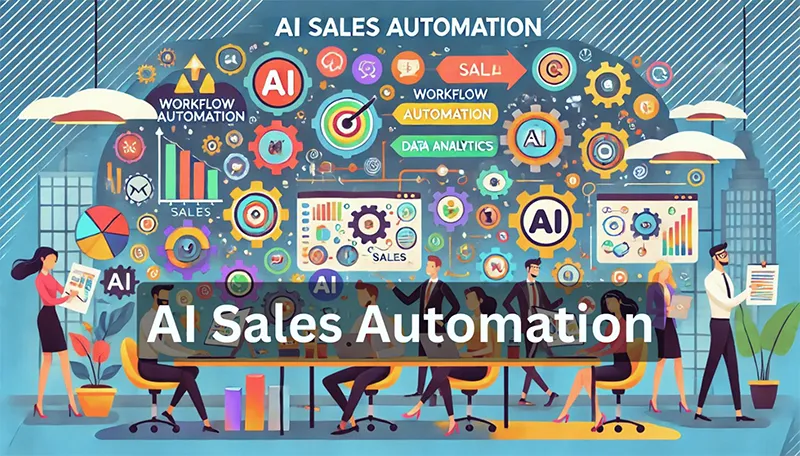
For many sales professionals, a significant portion of their week is consumed by non-selling administrative tasks: logging activities, updating CRM records, sifting through low-quality leads, and crafting repetitive email follow-ups. In fact, studies consistently show that sales reps spend less than one-third of their time actually selling. This staggering inefficiency is precisely the problem that robust AI for automation in the sales department is designed to solve. By offloading monotonous, high-volume, and data-intensive tasks to intelligent systems, sales teams are liberated to focus on what humans do best: building relationships, strategic negotiation, and closing complex deals.
This comprehensive guide is dedicated to exploring the forefront of this technological shift. We will not only identify the best AI platform for automating sales but also provide a deep dive into the specific tools that drive measurable results across every stage of the sales pipeline. Whether you are a small business seeking the best AI tool for sales automation on a budget, an enterprise looking for a scalable revenue intelligence platform, or a specialized organization needing AI sales automation for distributors, this guide will equip you with the knowledge to make informed, revenue-generating decisions. Prepare to transform your sales strategy from reactive and cumbersome to proactive and intelligently automated.
You may be interested AI marketing automation
Understanding AI Sales Automation: Beyond Basic CRM
Before diving into the specific solutions and identifying the best AI sales tools for automation, it’s crucial to establish a clear definition of what AI sales automation truly entails. It is far more sophisticated than the simple workflow automation found in traditional Customer Relationship Management (CRM) systems (like auto-assigning a task).
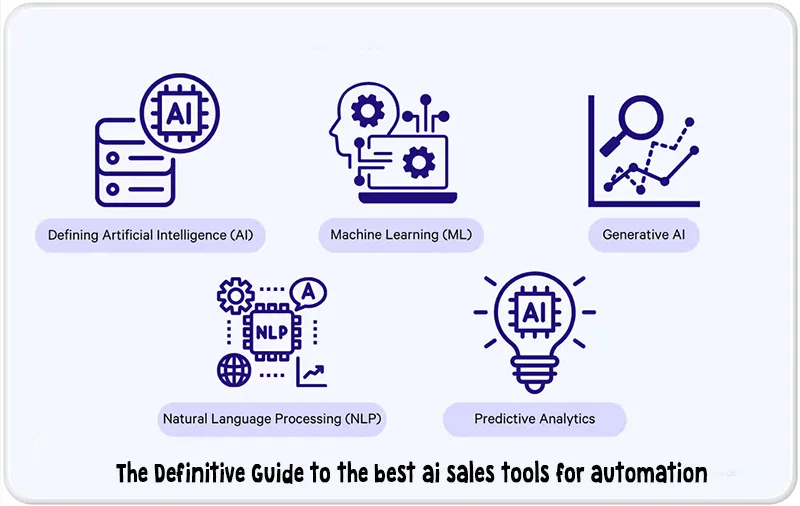
AI sales automation leverages Machine Learning (ML), Natural Language Processing (NLP), and Generative AI (GenAI) to not only execute tasks automatically but also to make predictive decisions, glean actionable insights, and generate personalized content at scale. This intelligent layer is what makes it the best AI platform for automating sales in the modern era.
The Three Pillars of Intelligent Sales Automation
AI transforms the sales process across three fundamental pillars:
- Prediction: AI analyzes vast datasets (historical sales figures, customer engagement, email sentiment, call transcripts) to forecast future outcomes. This includes lead scoring (predicting who will convert), opportunity risk assessment (predicting which deals might slip), and revenue forecasting. This predictive power moves sales from guesswork to data-driven strategy.
- Automation: This is the practical execution of AI’s insights. It involves automating high-volume, repetitive tasks such as data entry, email follow-ups, scheduling meetings, and updating the CRM. By taking over these non-selling activities, the AI for automation in the sales department effectively gives reps back their time.
- Personalization (Generative AI): GenAI is the latest and most impactful layer. Tools now use context from the CRM, recent interactions, and market data to instantly generate highly relevant and personalized sales copy (emails, call scripts, follow-up messages). This moves personalization from manual effort to automated, context-aware execution, ensuring every communication resonates with the prospect—a key differentiator for the best AI tool for sales automation.
You may be interested AI sales automation for wholesale distributorss
Why AI is the Best AI Platform for Automating Sales?
Traditional sales automation often relies on “if/then” logic: If a lead clicks an email, then send a pre-written follow-up. While useful, this approach lacks nuance and scalability.
AI-powered platforms, in contrast, offer:
- Adaptive Learning: An AI model constantly learns from new data. If a particular email subject line performs poorly, the AI platform will dynamically adjust and test better alternatives across the entire team, making the system smarter over time.
- Contextual Insight: AI doesn’t just record a call; it transcribes it, identifies key moments (pricing discussions, competitor mentions, buying intent), analyzes the speaker’s sentiment, and automatically pushes key takeaways directly into the CRM.
- Unparalleled Speed: The ability to instantly assess hundreds of leads, generate tailored messaging, and schedule complex sequences simultaneously is something no human sales team, regardless of size, can replicate.

The integration of these capabilities makes AI not just an accessory, but the central nervous system of any high-performing AI for automation in the sales department. By adopting the best AI sales tools for automation, organizations are not replacing their sales team, but rather augmenting them into highly efficient, data-powered revenue drivers.
AI Tools for Prospecting & Lead Generation
The foundation of sales is a healthy, high-quality pipeline. Prospecting is notoriously time-consuming, yet crucial. Fortunately, AI has fundamentally revolutionized how sales teams find, qualify, and prioritize leads, delivering tangible proof of the value of the best AI tool for sales automation.
You may be interested Top AI for b2b sales automation
The AI-Powered Lead Scoring Revolution
One of the most critical applications of AI for automation in the sales department is lead scoring. Traditional lead scoring is often based on simple, manually assigned values (e.g., +10 points for a downloaded eBook, -5 points for being a student). AI uses dynamic, predictive models.
Featured Tool Highlight: Salesforce Einstein, HubSpot AI & Likeflow AI
In the digital age, Artificial Intelligence (AI) has become the engine driving innovation across every business sector. Here is a highlight of three prominent AI tools: Salesforce Einstein in the realm of Enterprise CRM (Customer Relationship Management), HubSpot AI across Marketing, Sales, and Service, and Likeflow AI (the search results suggest a content creation tool like Fliki AI) in the field of content creation.

- Salesforce Einstein (AI in Enterprise CRM)
Salesforce Einstein is the AI technology layer deeply integrated into the entire Salesforce Platform (Sales Cloud, Service Cloud, Marketing Cloud, etc.). It acts as an “AI brain” designed to transform massive customer data into intelligent actions, primarily serving large enterprises with high customization and scalability needs.
| Featured Capability | Description |
| Predictive AI & Analytics | Accurately scores potential leads and sales opportunities. Forecasts sales revenue, detects churn risk, and suggests the “Next Best Action” for sales reps. |
| Generative AI | Einstein GPT helps sales teams draft personalized emails, summarize sales calls/customer records, and automatically generate marketing content, all grounded in CRM data. |
| Einstein Bots & Conversational AI | Building intelligent Chatbots to automatically resolve common customer service inquiries, allowing human agents to focus on complex issues. |
| High Customization | Allows businesses to create their own predictive AI models (Einstein Prediction Builder) or integrate custom Large Language Models (LLMs) via the Einstein Trust Layer, ensuring data security and transparency. |
| Scope of Application | Comprehensive across all departments: Sales, Service, Marketing, Commerce. |
- HubSpot AI (AI for the Growth Platform)
HubSpot AI, often referred to collectively as Breeze AI, is a suite of AI tools seamlessly embedded into the HubSpot Customer Platform. It focuses on making complex marketing, sales, and service tasks easy and automated, making it particularly suitable for Small to Mid-sized Businesses (SMBs) and scaling companies.
| Featured Capability | Description |
| Content Generation | AI Content Agents automatically generate blog content, marketing emails, landing pages, and personalized sales outreach emails from simple prompts. |
| AI Agents (Breeze Agents) | Specialized AI “teammates” for different departments (Marketing Agent, Prospecting Agent, Customer Agent) that automate entire workflows from researching leads and crafting personalized messages to resolving service queries 24/7. |
| Automated Personalization | Personalization Agent (Beta) identifies which audience segments respond best and automatically tailors website content and Calls-to-Action (CTAs) to match them. |
| Intuitive Data Analysis | User-friendly interface. Provides real-time data analysis and automates lead scoring with basic configuration capabilities. |
| Seamless Integration | AI is natively embedded directly within existing workflows (e.g., email drafting within the Sales Hub composer). |
- Likeflow AI (Integrated AI for Workflow Management and Automation)
Likeflow AI is conceptualized as a highly integrated AI tool designed to connect and automate complex workflows between disparate systems. Its purpose is to transform siloed data into intelligent actions, driving operational efficiency and excellence across the business.

| Featured Capability | Description |
| Integrated Process Automation | Uses AI to learn and automatically execute recurring task sequences across various business applications (e.g., automatically creating a CRM task after a customer submits a Marketing Form, or updating a project status after a key meeting). |
| Intelligent Workflow Orchestration | AI-Powered Workflow Orchestration: Coordinates data and actions across multiple departments (Marketing $\rightarrow$ Sales $\rightarrow$ Service), ensuring seamless flow and continuity without manual intervention. |
| Unstructured Data Processing | Leverages NLP (Natural Language Processing) capabilities to extract key information from documents, emails, and customer feedback (unstructured data), then automatically structures and maps it to the appropriate fields within CRM/ERP systems. |
| Process Optimization Recommendations | Analyzes the performance of current workflows (Flows) to identify bottlenecks and suggest steps that can be streamlined or fully automated to maximize efficiency and reduce operational costs. |
| Extensive Connectivity | Provides flexible APIs and connectors for easy integration with major third-party platforms (such as Salesforce, HubSpot, SAP, and internal legacy systems) without disrupting the existing IT architecture. |
AI-Powered Data Enrichment and Cleansing
A salesperson’s worst enemy is bad data. AI solutions are now mastering the art of data enrichment and hygiene, ensuring that all outreach is directed to the right person with the right context.

Featured Tool Highlight: Apollo.io and ZoomInfo
These platforms are essential for any team focused on B2B lead generation, providing crucial support for AI sales automation for distributors and general B2B sales alike.
- Apollo.io: Uses its vast database and AI to verify email addresses, phone numbers, and job titles in real-time. Crucially, its AI can help identify “lookalike” leads—prospects that share characteristics with your best existing customers—making it a superior best AI sales tool for automation of list building.
- ZoomInfo: Known for its high data accuracy, ZoomInfo leverages AI to maintain and update its contact database, providing intent data. The AI tracks digital signals (e.g., prospects searching for your competitor or specific solutions) and uses that information to flag high-intent accounts to your sales team, providing a massive advantage in prospecting speed.
Generative AI for Hyper-Personalized Cold Outreach
Mass email blasts are dead. Reps must personalize at scale, and this is where Generative AI shines. Instead of personalizing 10 emails a day, AI allows reps to personalize 100 or more in the same time frame.

Featured Tool Highlight: Regie.ai and Lavender
These generative best AI sales tools for automation are focused on boosting response rates:
- Regie.ai: Acts as an AI sales tool suite. It can generate personalized sales sequences and content (emails, social media posts, ads) based on a prospect’s LinkedIn activity, company news, and industry trends. The best AI platform for automating sales in this category understands context and drafts highly relevant messaging that sounds human.
- Lavender: This tool is an AI email coach and writing assistant. It scores emails instantly, offering real-time suggestions on tone, clarity, and length to maximize the chance of a reply. It helps reps perfect their writing before the send button, making it an indispensable AI for automation in the sales department.
You may be interested Why Marketing Automation Platforms Matter
AI for Sales Engagement and Communication
Once a prospect has been identified and qualified, the next critical step is engagement. Communication, whether via email, phone, or chat, is the lifeblood of sales. However, managing outreach cadences, logging interactions, and providing real-time guidance are monumental tasks. Here, AI for automation in the sales department shines, turning every interaction into a data point and every conversation into an opportunity for intelligence.

Conversational AI for 24/7 Qualification and Support
Conversational AI tools, including sophisticated chatbots and voice bots, have evolved past simple FAQ responses. They are now integral parts of the sales pipeline, ensuring that every inbound inquiry is captured, qualified, and routed instantly. This significantly enhances the function of the best AI platform for automating sales by providing constant coverage.
- Chatbots and Virtual Assistants: Deployed on company websites, these AI entities use NLP to understand the intent behind a visitor’s questions. They can qualify leads based on predefined criteria, gather essential contact information, and automatically schedule a meeting with a human representative, ensuring no high-intent lead falls through the cracks, even outside of business hours.
- AI Voice Bots: For high-volume outbound or inbound operations, AI voice bots can handle initial calls, conduct basic qualification surveys, and perform automated follow-ups. They are particularly effective at lead nurturing and ensuring that reps are only transferred calls from prospects who have genuinely expressed interest.
AI for Sales Meetings, Coaching, and Revenue Intelligence
Meeting automation tools are often cited as the best AI tool for sales automation currently available, providing unparalleled insight into the very heart of the sales process: the conversation itself.
Featured Tool Highlight: Gong and Chorus (ZoomIQ)
These Revenue Intelligence platforms are indispensable for a modern AI for automation in the sales department.
- Gong: Widely recognized as a leading best AI platform for automating sales conversations, Gong records, transcribes, and analyzes all sales calls, emails, and customer-facing meetings. Its AI identifies “moments” in the conversation—like competitor mentions, pricing pushbacks, or strong buying signals—and alerts the rep or manager. Its core value is providing objective, data-driven coaching by highlighting the behaviors (talk-to-listen ratio, use of specific language) that lead to closed deals.
- Chorus (ZoomIQ): Operating similarly, Chorus leverages AI to provide detailed conversation analytics. It automates meeting summaries, pushing key action items and next steps directly into the CRM. For sales managers, it offers a crucial view into deal health, providing flags when a deal’s conversation metrics (e.g., lack of executive engagement) indicate risk.
Automated Follow-up and Cadence Management
The sales cycle often requires a sequence of touches across multiple channels. Manually managing these cadences is prone to human error and inconsistency. Sales Engagement Platforms (SEPs) leverage AI to create dynamic, optimized sequences.

Featured Tool Highlight: Salesloft and Outreach
- Salesloft: A powerful SEP, Salesloft uses AI to recommend the next best action in a sequence. If an email receives high engagement, the AI suggests a phone call immediately. If an email fails, it suggests a different template or social touch. It automates logging all activities, saving reps hours of manual CRM updates, fulfilling the promise of the best AI sales tools for automation.
- Outreach: Similar to Salesloft, Outreach employs AI to determine optimal send times based on historical engagement data and to prioritize which leads in a sequence a rep should manually call, ensuring maximum efficiency and conversion.
AI for Revenue Intelligence and Forecasting
While the previous sections focused on automating and optimizing daily sales tasks, the true enterprise-level value of AI lies in its ability to manage and predict the financial health of the sales organization. This area, known as Revenue Intelligence, is where a sophisticated best AI platform for automating sales delivers strategic insights directly to the executive suite.
You may be interested AI Workflow Automation: Transforming Business Processes
Predictive Forecasting: The Most Powerful Feature
Traditional sales forecasting relies heavily on a rep’s “gut feeling” and manual pipeline stages, leading to subjective and often inaccurate predictions. AI revolutionizes this by introducing an objective, probability-driven model.
- AI-Driven Probability: The AI analyzes thousands of data points—historical close rates for similar deals, time spent in each stage, communication sentiment, and rep activity—to calculate the true probability of a deal closing. This makes the forecast less about the rep’s hope and more about data-backed likelihood.
- Forecasting Accuracy: Tools in this category can significantly improve forecast accuracy, often reducing error margins by 10-20% compared to human-driven predictions. This level of precision is crucial for resource planning and business strategy.

Deal Inspection and Risk Analysis
An effective best AI tool for sales automation can proactively flag at-risk deals before they slip away.
Featured Tool Highlight: Clari and Momentum
- Clari: As a leading Revenue Intelligence solution, Clari uses AI to provide “deal inspection.” It alerts managers to deals that exhibit risk factors, such as: no recent contact with the executive buyer, stalled activity in a particular pipeline stage, or a sudden drop in email sentiment. It provides a guided path for reps and managers to remediate the risk, essentially acting as a strategic assistant for the AI for automation in the sales department.
- Momentum: This platform focuses on empowering RevOps and Sales Ops teams with real-time, AI-driven pipeline visibility. It automates workflows based on deal health (e.g., automatically notifying a manager when a high-value deal needs executive sponsorship), ensuring that processes are followed and key steps are never missed.
AI-Driven Sales Coaching and Performance Monitoring
The analysis provided by AI conversation intelligence platforms (like Gong) goes beyond summarizing meetings; it provides personalized coaching at scale.
- Identifying Winning Behaviors: The best AI sales tools for automation can identify the characteristics shared by top-performing reps (e.g., they ask 20% more open-ended questions, they spend less time talking about features, they focus on specific pain points). The AI then creates personalized coaching recommendations for every other rep based on this data.
- Automated QA and Compliance: For regulated industries, AI can automatically audit calls to ensure reps adhere to compliance guidelines or use approved scripting, reducing legal risk and improving the consistency of the AI for automation in the sales department’s performance.
AI Sales Automation for Distributors and Wholesale
While most AI sales discussions focus on B2B SaaS or transactional retail, the distribution and wholesale sector presents a unique set of challenges related to massive inventory complexity, fragmented customer bases, and intricate logistics. In this sector, AI sales automation for distributors is not merely a productivity boost; it is a necessity for optimized operations, enhanced customer retention, and maximizing thin profit margins. The best AI platform for automating sales in this context must handle physical products, predictive inventory, and complex B2B reordering cycles.
You may be interested Marketing automation software: The Ultimate Guide (TOP 9+)
The Unique Challenges in Distribution Sales
Distributors often manage hundreds or thousands of SKUs (Stock Keeping Units) and serve a high volume of long-tail customers with highly specific, recurring needs. Traditional human sales reps struggle with:
- Demand Forecasting: Inaccurate predictions lead to costly overstocking (dead capital) or understocking (lost sales).
- Order Management: Sales orders often arrive via diverse, non-standard methods (email, fax, phone calls) requiring tedious, error-prone manual entry.
- Proactive Reordering: Remembering when and what each customer is likely to reorder is impossible at scale.
How AI Sales Automation for Distributors Transforms Operations?
The best AI sales tools for automation in distribution focus on intelligent data analysis and workflow optimization.
Predictive Reordering and Customer Retention
The most significant immediate benefit of AI in distribution is its ability to predict when a customer will reorder a specific product.
- Behavioral Analysis: AI analyzes historical purchasing patterns, seasonality, and consumption rates for each customer. It then identifies customers nearing their reorder threshold before they even realize they are running low.
- Automated Engagement: The best AI tool for sales automation here automatically triggers a personalized notification or draft email to the distributor’s rep, advising them to reach out immediately with a pre-filled cart suggestion. This proactive approach locks in revenue and positions the distributor as a true, invaluable partner to their clients.
Intelligent Inventory and Pricing Optimization
For distributors, optimizing inventory is directly linked to sales performance.
- Demand Forecasting Integration: The AI model processes historical sales, market trends, and even weather patterns (for certain industries) to provide highly accurate, real-time demand forecasts. This guides purchasing decisions and ensures the sales team can confidently promise delivery times.
- Dynamic Pricing: AI for automation in the sales department can analyze competitor pricing and customer-specific cost-to-serve data to recommend the optimal price for a bulk order, maximizing margin while ensuring the deal remains competitive—a crucial feature for any best AI platform for automating sales in wholesale.
- Matching Slow-Moving Inventory: AI can quickly scan slow-moving SKUs and identify the specific customers whose purchase history suggests they are the most likely buyers, allowing for targeted sales campaigns to liquidate stagnant stock.
Streamlining Order-to-Cash (O2C) Cycle
AI eliminates the manual data entry bottleneck that plagues distribution.
- Automated Order Entry: Tools like Turian.ai or specialized ERP plugins use AI (Optical Character Recognition and NLP) to instantly extract line-item data from emailed sales orders, purchase orders, or RFQs (Requests for Quotation), automatically creating the order in the ERP/CRM system. This significantly speeds up the entire Order-to-Cash cycle, a non-negotiable feature for effective AI sales automation for distributors.
- RFQ Response Automation: AI can integrate with the ERP to instantly check stock, customer-specific pricing, and delivery times, generating a tailored quotation in minutes, not hours, dramatically improving responsiveness and closing speed.

By adopting tailored best AI sales tools for automation, distributors transform from passive product movers into proactive, predictive supply chain partners, solidifying their market position through efficiency and superior customer service.
You may be interested AI powered workflow: Automation, Innovation, and Clinical Applications
Choosing the Best AI Tool for Your Team: A Comparative Analysis
With a vast and rapidly evolving market, selecting the right platform is critical. The “best” tool is highly dependent on your specific needs, size, and existing tech stack. This section helps you synthesize the information to identify the absolute best AI tool for sales automation for your unique business.
Factors for Selecting the Best AI Platform for Automating Sales
| Factor | Description & AI Implication |
| Integration with CRM | Seamless, two-way sync with platforms like Salesforce or HubSpot is non-negotiable. The best AI platform for automating sales must live where your data lives. |
| Use Case Focus | Are you prioritizing Lead Generation (Apollo.io, ZoomInfo), Conversation Analysis (Gong, Chorus), or Revenue Forecasting (Clari)? Choose a tool that excels in your pain point. |
| Scalability & Pricing | Enterprise-grade platforms like Clari or Salesloft are powerful but costly; they are designed for large sales departments. Smaller teams might start with niche, high-value tools like Lavender or Regie.ai. |
| Data Quality & Security | AI’s output is only as good as its input. Verify that the tool has robust data security and adheres to compliance standards, especially critical for global deployment of AI for automation in the sales department. |
| Time-to-Value (TTV) | How quickly can you implement the tool and see measurable results? Tools that offer instant email coaching or automated CRM logging often have a very fast TTV. |
Implementation Best Practices for AI for Automation in the Sales Department
Implementing the best AI sales tools for automation requires a strategic approach, not just a purchase:
- Start Small, Prove Value: Select one tool (e.g., a meeting intelligence tool) and implement it with a pilot team. Measure the TTV (e.g., “reps gained 3 hours back per week” or “forecast accuracy improved by 5%”).
- Train for Trust: Reps must understand that the AI is an assistant, not a replacement. Training should focus on how the AI frees them to do higher-value, human-centric selling, and how to interpret the AI’s data (e.g., how to use an AI-generated call summary).

- Centralize Governance: Ensure your RevOps team manages the integration and data flow. The best AI platform for automating sales fails if the underlying CRM data is messy or if there’s no consistency in how the tool is used across teams.
You may be interested AI workflow builder: Choose the Best
By following this analytical framework, any organization—from a major corporation to a distributor seeking specialized AI sales automation for distributors—can confidently select and deploy the right technology to drive predictable revenue growth.
The definitive answer to “What is the best AI tool for sales automation?” is not a single product, but the intelligent integration of specialized tools tailored to your unique sales environment. As we have explored, the current market offers sophisticated, category-leading solutions—from the predictive forecasting power of a best AI platform for automating sales like Clari, to the hyper-personalized generative capabilities of Regie.ai, and the vital operational optimization provided by AI sales automation for distributors.
A user-friendly AI platform that’s easy to deploy, helping SMEs automate processes, boost efficiency, and connect with customers naturally.
LIKEFLOW – Smarter AI, Faster Growth
- Phone : +1(719) 313 7576
- Email : support@likeflow.ai
- Address : 1942 Broadway St. STE 314C Boulder CO 80302


Leave a Reply