Customers expect personalized experiences, fast communication, and relevant offers across every channel they use. This is where marketing automation software becomes essential — helping companies streamline repetitive marketing tasks, nurture leads efficiently, and boost ROI through intelligent workflows.
Whether you’re a startup or an established enterprise, adopting the right software for marketing automation can transform your marketing efforts from chaotic to coordinated. In this comprehensive guide, we’ll explore what marketing automation really means, how it benefits small businesses, and which tools lead the market in 2025.
What Is Marketing Automation Software?
At its core, marketing automation software is a platform that helps businesses automate repetitive marketing tasks like sending emails, posting on social media, tracking leads, segmenting audiences, and measuring campaign performance.
Instead of manually sending every follow-up or scheduling every post, automation software takes over — ensuring your marketing runs smoothly, even while you’re asleep.
Modern marketing automation softwares integrate artificial intelligence (AI), predictive analytics, and CRM systems to deliver personalized customer experiences at scale. They don’t just save time — they enable smarter, data-driven decisions that increase engagement and conversion rates.
You may be interested Why Marketing Automation Platforms Matter
Why Businesses Need Marketing Automation
Automation is no longer a luxury; it’s a necessity. Here’s why thousands of companies — from startups to global enterprises — are investing in software for marketing automation:
- Save Time and Resources. Manual marketing processes drain energy and time. With automation, campaigns run automatically, freeing up your team to focus on strategy, creativity, and growth.
- Improve Lead Nurturing. Effective marketing automation software allows you to track leads throughout the customer journey. You can trigger personalized emails or SMS messages based on user behavior — for example, sending a discount after a cart is abandoned or a reminder after a product view.
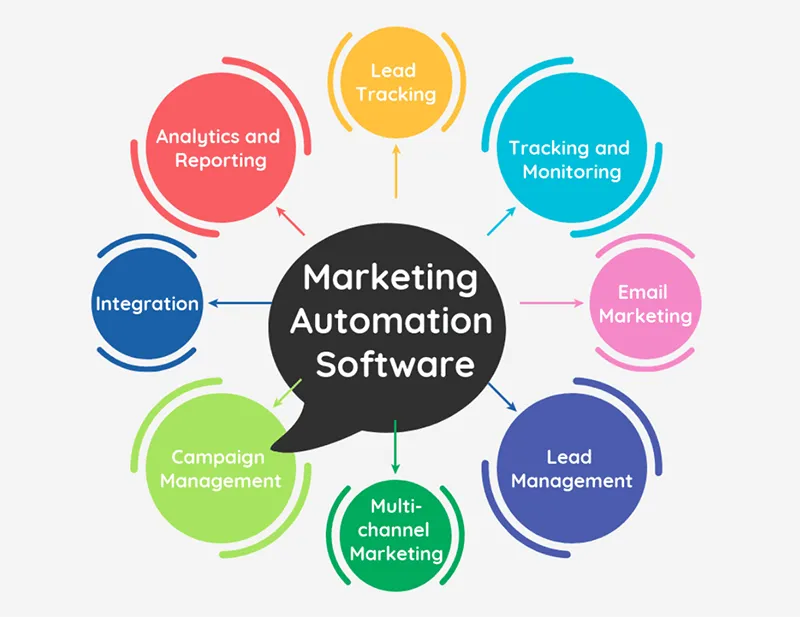
- Enhance Personalization. Automation doesn’t mean robotic messaging. In fact, AI-powered systems analyze data to deliver highly personalized content. That’s why marketing automation software for small business often includes segmentation tools and dynamic content features.
- Increase ROI. By optimizing workflows and targeting the right audience, marketing automation increases efficiency and cuts unnecessary costs — helping businesses achieve higher returns on every dollar spent.
You may be interested AI marketing automation
Benefits of Marketing Automation Software for Small Business
Small businesses often operate with limited staff and budgets — but they still need to compete with larger brands. This is where marketing automation software for small business provides a massive advantage.
- Affordable Efficiency
Automation tools designed for small businesses are cost-effective, easy to use, and offer all the core features needed to scale marketing operations without hiring extra staff.
- Consistent Customer Engagement
Even if you can’t manually follow up with every lead, automation ensures consistent, timely communication — building trust and loyalty.
- Better Use of Data
Small businesses often struggle to manage data from multiple channels. Marketing automation unifies this data, giving you a 360-degree view of customer behavior.
- Measurable Growth
With built-in analytics, small businesses can track performance, identify top-performing campaigns, and continuously refine strategies for better results.
You may be interested AI workflow management
How to Choose the Best Marketing Automation Software
Before investing in any platform, consider these factors:
- Budget – Determine how much you can allocate monthly or annually. Many marketing automation softwares offer tiered pricing based on features and contact volume.
- Scalability – Pick a solution that can grow with your business. The best software should allow easy upgrades without needing to migrate data.
- Ease of Use – A complicated interface can slow you down. Choose a tool with intuitive navigation, clear documentation, and responsive customer support.
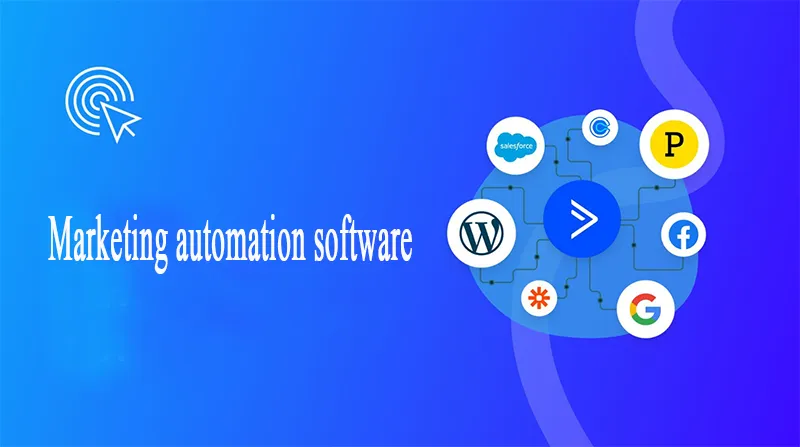
- Integration Capabilities – Your automation platform should connect seamlessly with CRM, analytics, and e-commerce tools.
- Customization and Flexibility – Ensure the software can adapt to your unique workflows, whether you’re running B2B campaigns or e-commerce promotions.
Top 9+ marketing automation software 2025
Choosing the right platform depends on your budget, goals, and team size. Here’s a look at some of the best marketing automation software in 2025:
Zapier
Zapier isn’t a traditional marketing automation platform — it’s an integration and workflow engine that connects your apps together. It helps automate repetitive marketing tasks between systems like your CRM, CMS, and email software.
Pros:
- Connects thousands of apps with no code (“Zaps”)
- Extremely flexible and versatile
- Easy to start and ideal for automating simple repetitive workflows
- Works great as a bridge between marketing, sales, and operations tools
Cons:
- Not designed for managing full marketing campaigns
- Complex workflows can become hard to maintain
- Pricing scales quickly with volume
- May have slight execution delays
Best For: Businesses using multiple apps who need to automate processes between them — not just marketing tasks but operations, CRM syncing, and lead updates.
Brevo (formerly Sendinblue)
Brevo is an affordable all-in-one platform for small businesses combining email, SMS, and simple CRM features.

Pros:
- Easy to use for beginners
- Affordable pricing and a generous free tier
- Combines email + SMS automation
- Built-in lightweight CRM
- Multilingual support
Cons:
- Limited advanced workflows
- Reporting and analytics are basic
- Shared IPs may cause deliverability issues
- Lacks enterprise-level customization
Best For: Small businesses and startups that want an easy, budget-friendly automation tool for email and SMS campaigns.
You may be interested AI workflow builder: Choose the Best
HubSpot Marketing Hub
HubSpot is one of the most popular all-in-one CRM + marketing automation systems, offering a wide range of features from lead nurturing to analytics.

Pros:
- Full ecosystem: CRM, marketing, sales, and service
- Powerful automation builder and lead scoring
- Excellent user interface and support
- Deep integrations and native CMS
Cons:
- Expensive at scale (pricing rises with contacts and features)
- Some customization requires technical skills
- May be overkill for small businesses
Best For: Growing SMBs and enterprises that need a unified CRM + marketing platform and can invest in a long-term automation ecosystem.
LikeFlow
LikeFlow is a new AI-powered automation platform that focuses on smart workflows and intelligent decision-making.

Pros:
- Combines workflow automation with AI agents
- Drag-and-drop visual interface
- Connects multiple tools and lets AI manage logic flows
- Great potential for next-gen “smart” marketing automation
Cons:
- New product — limited user base and community
- Limited documentation compared to established tools
- Performance at scale yet to be tested
Best For: Innovative teams that want to experiment with AI-driven workflows and integrate multiple tools intelligently.
Omnisend
Omnisend focuses on ecommerce automation — perfect for online stores that need behavior-based campaigns.
Pros:
- Seamless integrations with Shopify, WooCommerce, etc.
- Multichannel marketing (email, SMS, push notifications)
- Automation templates for abandoned carts, welcome flows, and product reminders
- Free tier available
Cons:
- Limited advanced analytics
- Deliverability can be inconsistent
- Advanced features require higher-tier plans
Best For: Ecommerce brands that want to drive sales with pre-built automation for customer behavior (cart abandonment, browse tracking, re-engagement).
ActiveCampaign
ActiveCampaign is a powerful and flexible automation platform known for its robust email sequences and behavior-based workflows.
Pros:
- Industry-leading automation builder
- Great for complex workflows (branching, scoring, conditional logic)
- Good deliverability rates
- Affordable mid-tier pricing
- AI-enhanced personalization options
Cons:
- Reporting could be deeper
- Pricing rises with contact list size
- Some learning curve for beginners
Best For: Small to mid-size businesses that want enterprise-level automation capabilities without the heavy cost or complexity.
Klaviyo
Klaviyo is the go-to data-driven marketing platform for ecommerc. It excels in segmentation, analytics, and personalized automation.
Pros:
- Deep ecommerce integrations (Shopify, Magento, etc.)
- Rich behavior tracking and segmentation
- Excellent deliverability
- Predictive analytics and personalization
- Pre-built flows for ecommerce (cart, browse, back-in-stock, etc.)
Cons:
- Pricing increases quickly with contacts
- Interface can be overwhelming for beginners
- Less useful for non-ecommerce businesses
Best For: Online stores with a focus on personalization, analytics, and customer retention through advanced segmentation.
You may be interested AI powered workflow: Automation, Innovation, and Clinical Applications
Customer.io
Customer.io is a data-driven behavioral messaging platform for web apps, SaaS, and mobile products.

Pros:
- Highly flexible workflow builder with deep logic control
- Event-based automation (triggered by user actions)
- Integrates easily with APIs, webhooks, and other tools
- Excellent for in-app and cross-channel communication
- Great developer documentation
Cons:
- Requires technical setup for event tracking
- More complex learning curve
- Pricing can climb for large-scale usage
Best For: Tech companies, SaaS, or apps that want advanced event-driven communication and have a team familiar with data or APIs.
Ortto
Ortto (formerly Autopilot) blends marketing automation + customer data platform (CDP) features with a strong visual journey builder.

Pros:
- Modern, visual “journey canvas” for automation
- Combines CDP + analytics + automation
- Allows customer segmentation and tracking in one place
- Templates for common journeys
Cons:
- Less mature than older enterprise tools
- Premium pricing for large contact volumes
- Requires technical setup for deeper customization
Best For: Mid-sized businesses that want a clear customer journey view and need data + automation in a single platform.
Mailchimp
Mailchimp is one of the oldest and most user-friendly email marketing platforms, widely used by beginners.

Pros:
- Simple and beginner-friendly
- Great email templates and editor
- Basic automation (welcome series, abandoned carts)
- Affordable and free tier available
Cons:
- Limited complex workflow options
- Weak behavioral tracking
- Reporting and analytics are basic
- Deliverability can fluctuate
Best For: Freelancers, small businesses, or startups that want an easy entry into email marketing automation.
Adobe Marketo Engage
Marketo (by Adobe) is a leading enterprise-grade marketing automation platform for large organizations.
Pros:
- Extremely powerful and customizable
- Supports multi-touch campaigns, lead scoring, and nurturing
- Strong enterprise reporting and integration with Adobe tools
- Ideal for large, complex marketing ecosystems
Cons:
- Very expensive (license + implementation + maintenance)
- Steep learning curve
- UI feels outdated compared to newer competitors
Best For: Enterprises with large teams and complex campaign requirements that need deep customization and integrations.
You may be interested AI Workflow Automation: Transforming Business Processes
Common Mistakes to Avoid
Even the best marketing automation software can underperform if used incorrectly. Here are mistakes to avoid:
- Over-automation: Don’t automate every touchpoint. Balance human interaction and technology.
- Poor Segmentation: Sending the same message to everyone reduces engagement. Use smart segmentation.
- Ignoring Data Insights: Regularly analyze reports and tweak campaigns accordingly.
- Lack of Testing: Always A/B test your emails, workflows, and landing pages.
In a competitive marketplace, staying ahead requires more than creativity — it requires automation. The right marketing automation software empowers businesses to engage audiences meaningfully, streamline processes, and drive measurable growth.
Whether you’re a small business looking for affordable tools or an enterprise seeking advanced capabilities, there’s a software for marketing automation designed for you. From email nurturing to AI-driven insights, these platforms help you build stronger relationships and scale faster — without burning out your team.
A user-friendly AI platform that’s easy to deploy, helping SMEs automate processes, boost efficiency, and connect with customers naturally.
LIKEFLOW – Smarter AI, Faster Growth
- Phone : +1(719) 313 7576
- Email : support@likeflow.ai
- Address : 1942 Broadway St. STE 314C Boulder CO 80302




Leave a Reply