That’s where a marketing automation platform steps in: it empowers businesses to streamline, automate, scale, and measure marketing efforts more efficiently than ever before. Rather than manually triggering every email, social post, or ad touchpoint, an automated marketing platform enables marketers to define rules, workflows, and triggers so that communications execute themselves—consistently, intelligently, and at scale.
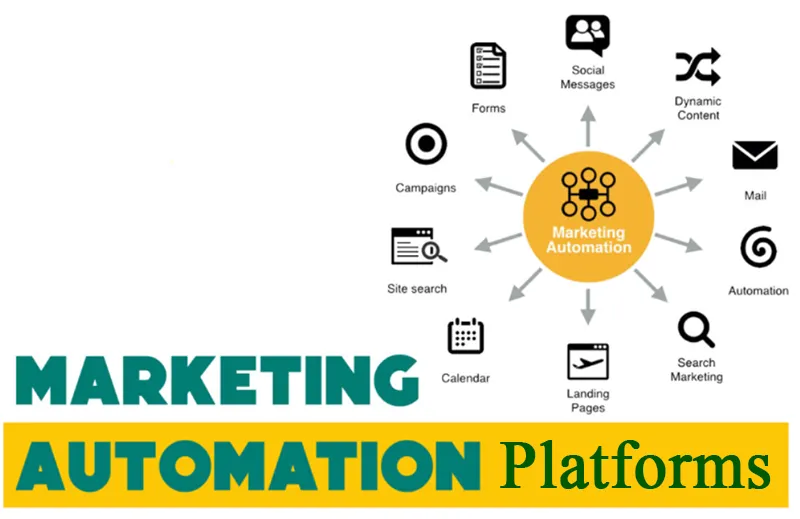
What Is Marketing Automation?
Marketing automation refers to the use of software and technology to automate repetitive marketing tasks, orchestrate personalized campaigns across channels, and measure campaign performance.
Rather than executing manual, one-off campaigns, marketers define workflows that automatically:
- send emails and follow-ups
- score leads and qualify prospects
- segment audiences based on behavior or attributes
- trigger cross-channel messaging (e.g. email, SMS, push notifications)
- orchestrate multi-step journeys over time
- analyze results and adapt campaigns continuously
In short, a marketing automation platform is the engine that drives “always-on” marketing at scale, serving as a centralized system for managing campaigns, customer lifecycle journeys, and performance dashboards.
You may be interested Marketing automation software: The Ultimate Guide (TOP 9+)

Why Marketing Automation Platforms Matter?
- Scalability & Efficiency: Marketers can scale campaigns without proportionally scaling headcount.
- Personalization & Relevance: Automated platforms allow granular segmentation and dynamic content based on user behavior.
- Operational Consistency: Campaigns don’t rely on manual execution, reducing human error and delays.
- Data-Driven Optimization: Real-time metrics and reporting enable faster iteration and optimization.
- Cross-Channel Coordination: A unified platform can synchronize messaging across email, SMS, social, mobile push, and more.
Statistically, businesses using marketing automation report up to 451% increase in qualified leads, a 14.5% boost in sales productivity, and a 544% average ROI (i.e. $5.44 return on every $1 spent). Around 75% of businesses already use at least one form of marketing automation, with 76% seeing ROI within a year.
These numbers underscore why marketing automation platforms are no longer optional—they’re foundational to modern marketing success.
Core Features to Expect in a Marketing Automation Platform
When evaluating automated marketing platforms, it’s essential to look beyond pricing and see whether a tool supports your strategy now and in the future. Below are critical features that distinguish the best from the average.

| Feature | Description / Why It Matters |
|---|---|
| Workflow Builder & Visual Journeys | Drag-and-drop editors to design multi-step, conditional flows (e.g. “If user opened email → send follow-up; else → nurture again”) |
| Segmentation & Targeting | Ability to split audiences dynamically based on attributes, behavior, lifecycle stage, and more |
| Lead Scoring & Grading | Automatic scoring of leads based on engagement, demographics, etc., to focus sales-effort |
| Multi-Channel Messaging | Support for email, SMS, push notifications, social, web, chat, etc. |
| Dynamic Content & Personalization | Insert personalized elements in messages (names, offers, product recommendations) based on data |
| A/B Testing & Optimization | Capability to test subject lines, content, send times, sequences and optimize automatically |
| Landing Pages, Forms & Popups | Built-in tools to capture leads without needing external landing page tools |
| CRM / Database Integration | Bi-directional integration with CRM systems (e.g. Salesforce, HubSpot CRM, Microsoft Dynamics) |
| Analytics & Reporting Dashboards | Real-time metrics, campaign reporting, funnel visualization, attribution |
| Automation Triggers & Events | Ability to trigger campaigns via custom events, API calls, form submissions, page visits |
| Scalability & Performance | Handling large volumes of contacts, emails, and high throughput without degradation |
| Data Privacy & Compliance | Support for GDPR, CAN-SPAM, data security, consent management |
| Support & Onboarding | Training, implementation assistance, customer support, migration expertise |
According to Dotdigital’s list of top marketing automation platforms, these capabilities (especially journey orchestration, integrations, analytics, and channel diversity) are essential differentiators.
A tool lacking in any of these areas may limit your ability to scale or innovate in the future.
You may be interested AI marketing automation
How to Choose the Right Marketing Automation Platform (Step-by-Step)
Choosing a platform can feel overwhelming. Use the following step-by-step process to make a smart decision that will scale with your business.
Define Your Requirements & Use Cases
List your must-have use cases. E.g.:
- “Send onboarding drip over 30 days”
- “Recover abandoned carts via email + SMS”
- “Score leads and push to CRM when score > X”
- “Trigger retention campaigns for inactive users”
Also note limits like contacts volume, refresh cycles, and data integrations.
Audit Your Existing Tech Stack & Data Flows
Map out your current tools (CRM, CMS, e-commerce, analytics). Check data schemas, APIs, and how the new platform must integrate with them. A poor integration can negate the automation benefits.
Evaluate Platforms via Live Demos & POCs
Don’t accept slide decks. Request a proof-of-concept or sandbox access. Test your actual use cases. See how intuitive the workflow builder is, how data is handled, and how reporting works.
Ensure Data Portability & API Availability
Can you export contacts, workflows, analytics? Does the system allow custom API calls or webhooks? Don’t get stuck later if you outgrow the platform.
Consider Scalability & Future Use Cases
Your first use case may be simple, but you may later want advanced personalization, AI-driven insights, or complex cross-channel orchestration. Ensure your platform supports progressive sophistication.
marketing automation platforms
Examine Pricing Structure vs. Value
Many platforms scale costs depending on contacts, features, sends, or modules. A low entry price may balloon at scale. Model out your usage over 1–3 years and compare total cost of ownership.
Assess Support, Onboarding Services & Community
A robust implementation partner and vendor support can make or break success. Check case studies, user communities, training offerings, and SLAs.
Validate Compliance & Security Requirements
Check how the platform handles GDPR, consent campaigns, subscription toggles, data encryption, role-based access, and breach protocols.
Prepare a Phased Rollout Plan
Start small (e.g. with one drip campaign or one customer segment) and iterate. Train your team, validate results, and scale gradually.
Define Key Metrics & KPIs for Success
Decide upfront which metrics you’ll track (e.g. open rate, click-through, conversion rates, revenue per email). Revisit them often to optimize automation flows.
You may be interested AI workflow management
Top Marketing Automation Platforms to Consider
To help narrow the field, here’s a comparison of several top marketing automation platforms (or leading contenders) in 2025–2026. These platforms span different use cases, budgets, and business types.
Note: This list is illustrative, not exhaustive. Always evaluate based on your specific needs.

| Platform | Best For / Strengths | Potential Trade-Offs |
|---|---|---|
| HubSpot Marketing Hub | A powerful all-in-one solution with CRM, content tools, analytics, and advanced automation. | Higher cost at scale; advanced features may require premium tiers. |
| ActiveCampaign | Excellent for email automation, marketing + CRM combos, and small-to-medium businesses. | Less mature for enterprise-scale features. |
| Klaviyo | Strong for e-commerce brands (especially Shopify) with deep email + SMS automation. | Focused more narrowly on commerce use cases. |
| Omnisend | Tailored for e-commerce; integrated email + SMS + push flows. | Not as broad for B2B or content-heavy brands. |
| Mailchimp | Accessible for SMBs; well known and easy to use. | May lack advanced journey orchestration for complex uses. |
| Zapier | Useful as a flexible orchestrator connecting apps and automating simple tasks. | Not a full-fledged marketing automation “platform” – better for connectivity. |
| Brevo (formerly Sendinblue) | Affordable all-around tool combining email, SMS, marketing, and CRM. | Scaling features may require custom add-ons. |
| Salesforce Marketing Cloud | Enterprise-grade with deep capabilities, AI, large-scale personalization, and data capabilities. | Complexity, cost, and steep learning curves are challenges. |
| Adobe Experience Cloud / Adobe Marketing Cloud | Strong for enterprises needing profound content, personalization, AI, and integration. | Expensive and complex to implement; requires maturity. |
Let’s dive into a few of these in more depth:
- HubSpot: Seamless integration with CRM, robust workflow builders, in-depth analytics, A/B testing, content tools, and support. Many marketers choose HubSpot as their go-to marketing automation platform.
- Klaviyo: Particularly favored in e-commerce, Klaviyo offers predictive analytics, dynamic segmentation, and flows that react to customer purchase and browsing behavior.
- Omnisend: A leaner alternative for commerce-focused brands wanting integrated email + SMS + push notifications in one orchestration suite.
- Salesforce Marketing Cloud and Adobe Experience Cloud: Better suited for enterprises with large budgets and complex requirements like real-time personalization, predictive modeling, and cross-sell orchestration.
Also worth noting: Dotdigital’s “top marketing automation platforms 2025” list includes names like Emarsys, Braze, Iterable, and Insider as leaders in journey orchestration and personalization.
When selecting from these top marketing automation platforms, always demo core workflows, test integrations, and validate whether the features truly match your use cases—not just in marketing collateral, but in real scenarios.
You may be interested AI workflow builder: Choose the Best
Best Practices for Implementing & Scaling Automation
Once you’ve selected a marketing automation platform, these practices increase your chance of success.
- Start with High-Impact Use Cases. Begin with 1–2 campaigns that can show measurable lift (e.g. onboarding, cart recovery, winback). Prove ROI before expanding.
- Map Real Customer Journeys. Base your automation on actual user journeys and pain points—don’t just automate everything at once.
- Segment Early & Often. Use behavioral and demographic segmentation to avoid “spray and pray” mass messaging.
- Use Progressive Profiling. Rather than asking all data in one form, gradually build a richer profile via multiple touchpoints.
- Design for Human Fallbacks. Allow manual oversight—e.g. emails flagged for review, overrides for special customers.
- Leverage A/B and Multi-Variant Tests. Continuously test subject lines, send times, creative, and sequence order to optimize performance.
- Monitor Deliverability & Clean Your Lists. Regularly clean out inactive or bounced contacts; warm new IPs; monitor spam reports.
- Align Marketing & Sales Teams. Use lead scoring and shared dashboards so that qualified leads seamlessly transfer to sales.
- Iterate Based on Data, Not Assumptions. Use data-driven decisions to refine flows, segmentations, and content—don’t stick to what you “think” will work.
- Document Everything. Maintain clear documentation of workflows, triggers, naming conventions, and logic so team members can understand and maintain flows.
- Train Your Team & Ensure Buy-In. Automation succeeds only if people adopt it. Provide training, governance, and guardrails.
- Be Patient—Expect Learning Curves. Even the best teams take months to fully master a marketing automation platform. Track early wins and adjust.
You may be interested AI powered workflow: Automation, Innovation, and Clinical Applications
Example Narrative: How a B2C E-commerce Brand Could Use an Automated Marketing Platform
Let’s walk through a real-world narrative to illustrate how an automated marketing platform drives value.
Business Context
You run an e-commerce store selling niche athletic apparel. You have a few thousand website visitors a day, several hundred new email signups monthly, and moderate repeat purchases. Your goal is to increase repeat purchase rate and average order value (AOV).
Implementation of Automation
- Welcome & Onboarding Series. As soon as someone signs up (via a site popup), the automated platform sends a welcome email, then a second email offering a 10% discount reminder, then a third email with best-selling items.
- Abandoned Cart Recovery. If a user places items in cart but doesn’t buy within 1 hour, send a reminder. If still unconverted in 24 hours, send a second reminder with social proof or product reviews.
- Post-Purchase Journey. After purchase, send a thank you email, then a product usage guide, then an upsell or cross-sell suggestion (e.g. matching accessories), then eventually a review request.
- VIP & Loyalty Segment. Customers who reach a certain spend threshold are automatically moved into a VIP segment and receive exclusive offers and early access to new products.
- Winback Flow. If a customer hasn’t purchased in 90 days, trigger a winback email offering a special discount or reminding them of top products.
- Behavioral Trigger Campaigns. If a user browses a specific collection but never purchases, trigger a personalized email or push about that category.

- Predictive Upsell Modeling. Use machine learning features to suggest items that similar users bought, and embed recommendations dynamically.
- Analytics & Attribution. Use built-in reporting to see which flows, touchpoints, or product suggestions drive the most conversions and revenue.
You may be interested AI Workflow Automation: Transforming Business Processes
Outcomes & ROI
- You see your repeat purchase rate increase by 20%
- Abandoned cart recovery adds ~5–10% incremental revenue
- Customer lifetime value (CLV) improves
- Marketing team time is freed up to focus on strategy, content, and growth
- The system pays for itself in less than 12 months
This kind of automation narrative is exactly what many brands referenced in case studies achieve—making the technology tangible, measurable, and scalable.
As AI, predictive analytics, and omnichannel experiences continue to advance, the top marketing automation platforms will only become smarter, more intuitive, and more integrated. The key is not just adopting technology, but aligning it with a clear strategy, quality data, and a human touch.
Ultimately, marketing automation platforms isn’t about replacing marketers — it’s about empowering them. With the right platform, you can free your team from repetitive tasks, unlock real-time customer intelligence, and build lasting relationships that drive consistent growth. In the age of automation, success belongs to those who combine innovation with authenticity.
A user-friendly AI platform that’s easy to deploy, helping SMEs automate processes, boost efficiency, and connect with customers naturally.
LIKEFLOW – Smarter AI, Faster Growth
- Phone : +1(719) 313 7576
- Email : support@likeflow.ai
- Address : 1942 Broadway St. STE 314C Boulder CO 80302




Leave a Reply