The digital landscape is undergoing a dramatic transformation, and at the forefront of this change is the rapid ascent of generative AI image generators. These powerful tools are redefining creativity, making it possible for anyone—from professional designers to casual hobbyists—to conjure stunning, original visuals from simple text prompts. No longer are stock photos or complex design software the only path to high-quality imagery. Today, the power of AI generated images is accessible to millions.
This guide will dive deep into the world of AI art generation, exploring what these tools are, how they work, the essential role of text prompts, and, most importantly, how to find a reliable free ai image generator that meets your needs.
Understanding the Rise of the AI Image Generator
An AI image generator is a type of artificial intelligence program that utilizes machine learning models, primarily based on diffusion models, to create images from a natural language description, known as a ‘prompt.’
The technology works by training a neural network on massive datasets of images and their corresponding descriptions. This process allows the AI to learn the complex relationships between text and visual concepts. When a user enters a prompt—for example, “A cyberpunk city at sunset with neon-lit flying cars, highly detailed”—the AI doesn’t just search for a matching image; it synthesizes a completely new one, pixel by pixel, based on its learned understanding of those elements.

The quality of the output, the flexibility of the tools, and the sheer speed of creation are why the term ai generated images has become a fixture in creative and business conversations alike.
You may be interested AI Image Search: The Future of Visual Discovery
The Allure of the Free AI Image Generator
For many, the first step into AI art is through a free ai image generator. The availability of cost-free tools has significantly democratized the technology, lowering the barrier to entry for students, small businesses, and individuals experimenting with new visual concepts.
When searching for a free ai image generator, users are often looking for tools that offer:
- Zero Cost Access: Truly free tools allow users to generate a limited number of images daily without a subscription.
- Basic Feature Set: Even the ai image generator free versions often provide core features, including different aspect ratios and artistic styles.
- No Watermarks: The best free ai image generator options allow users to download and use their creations without intrusive branding.
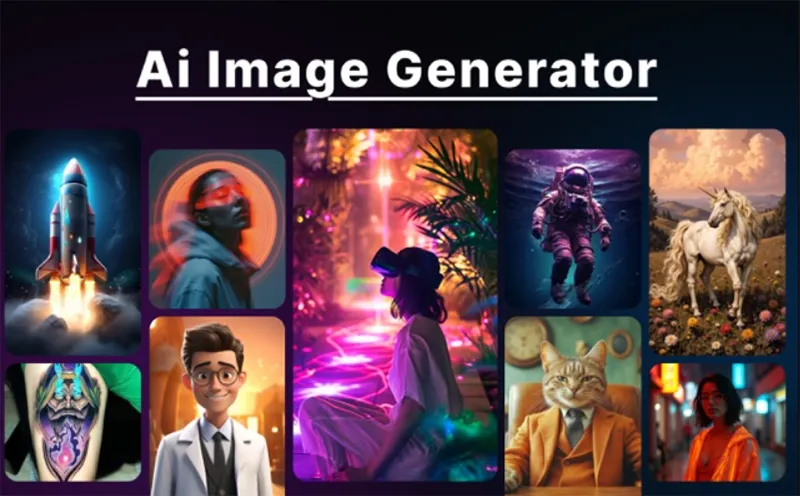
The competition among developers is fierce, leading to increasingly powerful and generous free tiers. While paid versions unlock unlimited generations, faster processing, and advanced features, the free options are more than sufficient to grasp the potential of this technology.
Top Platforms Offering an AI Image Generator Free Experience
The market is saturated with platforms, but a few names consistently stand out for providing a high-quality ai image generator free experience:
- Bing Image Creator (Powered by DALL-E): Often considered one of the best ways to get a free ai image generator experience leveraging the power of OpenAI’s DALL-E model. It offers a certain number of ‘boosts’ daily for faster generation.
- Adobe Firefly (Free Tier): Adobe’s generative AI suite offers a credit-based free tier, allowing users to generate high-quality images and leverage powerful features integrated with their professional creative ecosystem.
- DreamStudio (Stable Diffusion API): While primarily a paid service, DreamStudio provides ai image generator free credits to new users, allowing them to test the cutting-edge capabilities of the open-source Stable Diffusion model.

Choosing the right free ai image generator often depends on the specific style you are aiming for. Some generators excel at hyper-realism, while others are better for stylized, artistic, or abstract ai generated images.
You may be interested The Ultimate Guide to the Best AI Photo Generators
Mastering the Prompt: The Key to Great AI Generated Images
The true art of using an AI image generator lies in prompt engineering. The prompt is the text command that directs the AI’s creation process. A poor prompt leads to poor results, while a meticulously crafted prompt yields breathtaking ai generated images.

Here are the key components of an effective prompt for any ai image generator:
- Subject/Object: Clearly define the main focus. (e.g., a majestic lion, a detailed antique clock).
- Setting/Scene: Establish the background and environment. (e.g., standing on a misty mountain peak, in a dark, candlelit library).
- Style/Medium: Specify the artistic style. This is crucial for controlling the look of your ai generated images. (e.g., in the style of Van Gogh, cinematic photorealistic, 3D render, watercolor painting).
- Composition/Perspective: Dictate the camera’s view. (e.g., close-up shot, wide-angle lens, low-angle perspective).
- Quality/Detail Modifiers: Use descriptive terms to enhance the output quality. (e.g., hyper-detailed, 8K resolution, volumetric lighting, unreal engine).
The better you get at writing prompts, the more valuable your experience with a free ai image generator will become. It transforms the tool from a simple novelty into a powerful creative partner.
Real-World Applications of AI Image Generators in Professional Work
The capabilities of the AI image generator extend far beyond novelty art; they are now indispensable tools in professional creative workflows across various industries. By dramatically reducing the time and cost associated with traditional visual production, ai generated images are empowering professionals to scale their creative output and innovate faster. Whether leveraging a powerful paid tool or a free ai image generator, the impact on productivity is undeniable.

Marketing and Advertising (Visual Prototyping and A/B Testing)
Marketing departments rely on constant streams of fresh, high-quality visuals to run successful campaigns. An AI image generator eliminates the lengthy process of coordinating photoshoots or commissioning an illustrator for every small variation.
Practical Example: Tailored Ad Creatives
A digital marketing agency is launching an ad campaign for a new line of sustainable sneakers. Instead of creating just three static visuals, they use an AI image generator (like Midjourney or DALL-E) to rapidly prototype 20 different visual concepts in one afternoon.
- Prompt 1 (Segment A – Eco-Conscious Millennial): “A photorealistic product shot of sustainable canvas sneakers standing on mossy forest ground, volumetric sunlight, soft focus.”
- Prompt 2 (Segment B – Urban Commuter): “Low-angle shot of the same sustainable sneakers walking across a sleek, wet subway platform, neon city lights reflecting, cinematic style.”
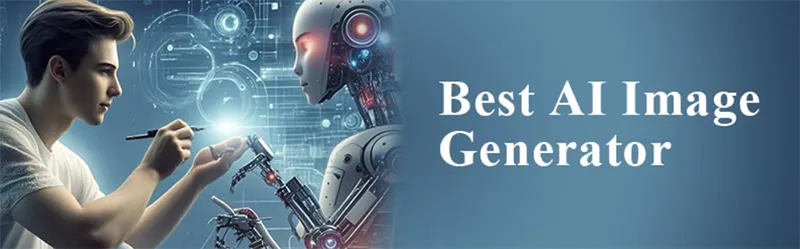
This speed allows them to A/B test a wide variety of ai generated images against specific audience segments, optimizing for the highest click-through rate in real-time. This level of rapid iteration was previously impossible without a massive budget.
You may be interested The best things to ask chat GPT: Smart, Fun, and Funny Prompts to Try in 2025
Graphic Design and Concept Art (Ideation and Mockups)
For designers, the AI image generator acts as a powerful brainstorming partner, instantly visualizing complex, abstract concepts that would take hours to sketch or model manually.
Practical Example: Website Header Concepts
A UX/UI designer is creating a new website for a FinTech startup focused on space investment. They need a unique, futuristic header image that conveys trust and innovation.
Prompt: “An abstract, geometric illustration of a golden ratio galaxy swirling around a single shining coin, minimalist vector art, deep blue and gold palette.”
The designer uses a free ai image generator with a good artistic model (or an integrated tool like Adobe Firefly) to generate ten unique options in five minutes. They then select the most promising output, refine it in professional software, and save two days of concept sketching. The ai generated images serve as an ideal starting point for a refined final piece.
E-commerce and Product Visualization (Virtual Photography)
For online retailers, especially startups and those with expansive catalogs, the cost of photographing every product variant in different settings is prohibitive. AI image generators solve this by creating virtual product photography.
Practical Example: Home Decor Product Visualization
An e-commerce seller of custom picture frames needs to show a single frame design in five different home environments (modern loft, rustic farmhouse, minimalist Scandinavian, etc.).

Prompt: “A close-up product shot of a dark oak picture frame displayed on a sleek, white marble console table in a minimalist, sun-drenched Scandinavian living room, hyper-photorealistic, soft shadows.”
Using a specialized AI image generator designed for product mockups, they produce five high-quality, professional ai generated images that look like they were taken by a high-end photographer, significantly faster and cheaper than traditional product staging.
Content Creation and Blogging (Unique Visuals)
Content creators are constantly looking for visuals to accompany their articles that are more engaging than generic stock photos. An AI image generator free tool provides a limitless supply of context-specific, copyright-friendly illustrations.
Practical Example: Blog Post Header Image
A blogger writes an article about “The Psychology of Time Management.” Finding a literal stock photo for this topic is difficult.
Prompt: “A surreal illustration of a human brain with tiny gears and clocks inside, running on a track made of sand, low-poly 3D art style, high contrast.”

The ai image generator free version instantly produces a unique, conceptual header image that is perfectly aligned with the abstract topic, improving the post’s visual appeal and keeping it away from overused imagery, which is a key win for content SEO.
You may be interested How to Cancel ChatGPT Subscription (Plus, Pro, Team, or Enterprise)
Ethical and Legal Considerations of AI Generated Images
As the technology behind the AI image generator rapidly advances, so too do the ethical and legal discussions surrounding ai generated images. Users, especially those utilizing a free ai image generator for commercial purposes, must be aware of:
- Copyright and Licensing: The legal status of ai generated images remains a complex and evolving area. While many platforms grant users commercial rights to images created on their service (even on the ai image generator free tiers), it is critical to read the terms of service for each specific tool.
- Bias and Data Training: AI models are trained on existing human data, which can sometimes introduce bias (racial, gender, etc.) into the outputs. Responsible users and developers of an AI image generator must be mindful of and actively work to mitigate these biases.
- Deepfakes and Misinformation: The ease with which an AI image generator can create realistic images necessitates caution regarding the potential for misuse in creating misleading or harmful content.
Questions About AI Image Generators (FAQ)
- What is an AI Image Generator?
An AI Image Generator is a tool that uses artificial intelligence to turn text descriptions (prompts) into digital images. Trained on billions of pictures and artistic styles, it helps users create unique visuals within seconds—no design skills required.
- How does an AI Image Generator work?
It relies on diffusion models or GANs (Generative Adversarial Networks). The AI interprets your text prompt, then gradually “paints” the image by refining shapes, colors, lighting, and details until the final artwork is complete.

- Can I use an AI Image Generator for free?
Yes. Tools like Bing Image Creator (powered by DALL-E 3), Lexica, and Playground AI allow free image generation with daily limits. Premium platforms such as Midjourney or Leonardo AI require paid plans for higher resolution, faster speed, and advanced customization.
- Are AI-generated images copyright-free?
It depends on how you use them. Most platforms let you use AI-generated images for personal or commercial purposes, but you must avoid copying copyrighted characters or specific artists’ styles. Always review each platform’s terms of service before commercial use.
- Will AI Image Generators replace designers?
Not entirely. AI speeds up brainstorming, prototyping, and idea visualization, but designers remain essential for storytelling, brand identity, and creative direction. Think of AI as a creative assistant, not a replacement.

- Can AI Image Generators create realistic human photos?
Yes, but with ethical and legal boundaries. Most platforms prohibit generating real people or celebrities without consent. However, you can create fictional characters or photorealistic avatars safely and ethically.
The AI image generator has fundamentally changed how we create and consume visual media. Whether you are searching for a reliable free ai image generator to test the waters or a powerful paid suite for professional-grade ai generated images, the core principle remains the same: the output is only as good as the prompt.
By understanding the technology, mastering prompt engineering, and applying sound SEO principles to your resulting ai generated images, you can harness the full creative potential of this visual revolution. Take the leap, find your preferred ai image generator free tool, and start creating visuals that were once confined to the realm of imagination.
A user-friendly AI platform that’s easy to deploy, helping SMEs automate processes, boost efficiency, and connect with customers naturally.
LIKEFLOW – Smarter AI, Faster Growth
- Phone : +1(719) 313 7576
- Email : support@likeflow.ai
- Address : 1942 Broadway St. STE 314C Boulder CO 80302
Leave a Reply