Best AI Chatbot tools are transforming the way we communicate, work, and build digital experiences in 2025. From personal assistants that understand natural language to intelligent agents that automate customer support, today’s AI chatbots go far beyond simple scripted replies. They can write content, summarize data, answer questions, and even integrate seamlessly with your business tools. In this guide, we’ll explore the leading contenders for the best AI chatting platforms—comparing their features, strengths, and real-world use cases—so you can choose the perfect chatbot for your workflow, team, or brand.

Why “best AI chatbot” matters
Before diving into comparisons, let’s clarify why selecting the best AI chatbot (or best AI chatting experience) is more than just a trendy decision:
- User experience & brand perception: A slow, error-prone bot frustrates users. A polished, accurate chatbot enhances trust and brand image.
- Operational efficiency: A good chatbot can reduce human workload, handle repetitive queries, and route complex issues to real agents.
- Scalability & cost: As your traffic grows, you need a solution that scales without skyrocketing costs.
- Integrations & ecosystem: The best AI chatbot often ties seamlessly into your CRM, knowledge base, marketing stack, or internal systems.
- Customization & control: You want control over the conversation flow, tone, fallback logic, and data privacy.

Thus, “best AI chatbot” depends heavily on your use case—customer support, content generation, internal knowledge assistant, or general conversational agent.
You may be interested How to make ai chatbot: A Complete Guide
The current landscape: Top AI chatbot names in 2025
According to recent expert roundups (e.g. Zapier’s “The best AI chatbot” list) and comparisons like “best AI chatbots” in enterprise contexts, several names dominate the field. Here are the leading contenders, with strengths and trade-offs:
ChatGPT (OpenAI)
- Pros: Excellent general-purpose conversational abilities, broad ecosystem, high reliability, frequent updates, large community, many plugins & integrations.
- Cons: The free tier may have rate limits, it sometimes hallucinates (makes up information), and you may need to fine-tune or guard output for business-critical contexts.
- Best for: Content generation, ideation, drafting emails, internal tools, and as a fallback for knowledge queries.
Many reviews cite ChatGPT as the “editor’s choice” in 2025 for broad chatbot usage.
Claude (Anthropic)
Claude is often pitched as a more “aligned” alternative to ChatGPT, with safety guardrails built in.
It tends to be strong in longer context and reasoning tasks, and is favored when controlling output style and constraints is key.
Google Gemini
Gemini is well-suited for users invested in Google’s ecosystem. If you’re already using Google Workspace, it can integrate more seamlessly. Zapier mentions Gemini among the top AI chatbot picks.
DeepSeek
DeepSeek is a newer entry in the AI chatbot space (2025) that’s gained attention for delivering strong performance at lower cost.
It supports free use with no query limits in many markets, though more advanced or business-level plans may carry fees.
You may be interested Customer support tools for your business
Botpress (for chatbot building)
While ChatGPT and others are conversational models, Botpress is more of a chatbot builder / platform (with AI models under the hood). Zapier calls it “the most powerful AI chatbot builder” due to its flexibility, logic flows, integrations, etc.
If you’re building a custom bot for your website or app, Botpress might give you more control than off-the-shelf chatbots.

Other names: Character.ai, Kuki, etc.
Character.ai allows users to create chat characters with personalities. It’s more oriented toward fun, experimental chats than enterprise use.
Kuki (formerly Mitsuku) is a chatbot with personality and has won several conversational AI competitions.
These can shine for entertainment, training, or creative use—but may lack enterprise-grade support or data controls.
Side-by-side comparison: what to look for in a “best AI chatting” solution
Here’s a framework to evaluate chatbots. Use this to see which one fits your needs:
| Criterion | Why It Matters | What Good Looks Like |
|---|---|---|
| Natural language quality / coherence | Users expect fluid, human-like conversation | Minimal bizarre responses, good at context retention |
| Knowledge grounding / factuality | Bots should avoid making things up (hallucinations) | Ability to cite sources or refer to documents |
| Context window / memory | Long conversations need memory of previous context | Support 100k+ tokens or memory modules |
| Integration support | Chatbots are useful when they tie into tools | CRM, Slack, databases, APIs, plugins, Zapier, etc. |
| Customization & control | You’ll want to control tone, logic, fallback flows | Ability to set directives, guardrails, custom rules |
| Scalability & cost | As usage grows, cost must remain manageable | Predictable scaling, tiered pricing, free or trial plans |
| Security & data privacy | Sensitive queries need protection | On-premises option, encryption, GDPR compliance, API controls |
| Support, community & tooling | Good support accelerates success | Documentation, SDKs, community forums, monitoring |
Using this checklist, you can test chatbots in your own context—especially for “best AI chatting” (i.e., how it actually performs in conversation).
You may be interested Why is chat gpt not working? Common Issues and Fixes
Deep-dive: how to pick the “best AI chatbot” for your use case
Let’s break down a few common use cases and match them to top choices.
Use case A: Customer support, FAQs, low-code
If you want a customer-facing chatbot that answers common questions, triages, and escalates issues:
- Botpress gives you full control over dialog flows, integration, fallback logic. It’s a builder.
- Zapier Chatbots / Zapier Agents allow no-code integration with your apps (CRM, ticketing, Slack). Zapier has a “create custom AI chatbot” workflow.
- For more intelligent responses, you might plug ChatGPT or Claude into that front-end.
- When cost is key, DeepSeek may be appealing since it offers generous free usage.

Use case B: Content creation, ideation, brain-dump
If your main goal is writing, brainstorming, drafting content:
- ChatGPT shines in generating blog posts, marketing copy, code snippets.
- Claude can sometimes be more stable for structured tasks (reports, reasoning).
- DeepSeek is making inroads, offering comparable performance at lower cost.
- Some hybrids let you compare outputs from multiple models in one UI (so you pick which model is best for each prompt).
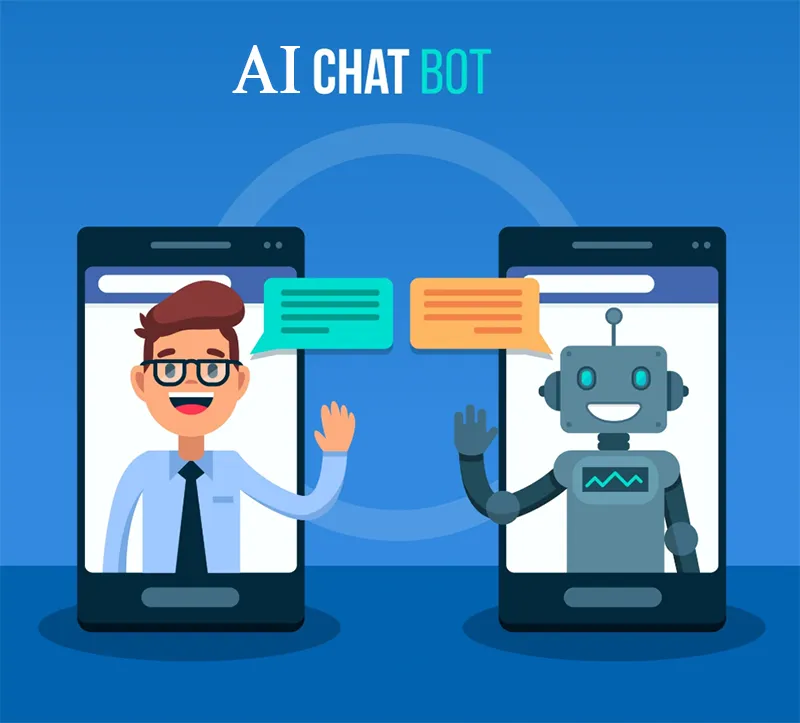
Use case C: Internal knowledge assistant or company “copilot”
If you want a private bot embedded in your company to answer from your internal documents:
- The ability to feed your own knowledge base or connect to internal repositories is critical (PDFs, wiki, database).
- Customizable logic or fine-tuning may be required, so platforms like Botpress or self-hosted solutions shine.
- You might combine that with a model (ChatGPT, Claude, etc.) for natural language generation.
Use case D: Fun / social / creative chat
If your priority is personality, entertainment:
- Character.ai lets you create chat personalities and roleplay characters.
- Kuki / Mitsuku works well for conversation, jokes, casual chat.
- These are often not built for enterprise reliability, but are delightful for engagement, demos, or user entertainment.
You may be interested The Best ChatGPT Alternatives in 2025
Strengths and challenges: what to watch out for
Even the best AI bots aren’t perfect. Here are common pitfalls and how to mitigate them:
Hallucinations (made-up content)
AI models sometimes produce plausible-sounding but incorrect answers.
How to counter:
- Use grounding or retrieval-augmented generation (connect to knowledge base).
- Include verification or safety logic in the bot.
- Use fallback to human support when confidence is low.
Lack of memory / context drift
Bots may lose track over long conversations, repeating or forgetting earlier statements.
How to counter:
- Use chat memory or context windows (some bots support 100k+ tokens).
- Insert “reminder” prompts to re-anchor context.
- For long tasks, break the conversation into sub-threads.
Integration complexity
Connecting to internal APIs, CRMs, or databases can be difficult for non-technical teams.
How to counter:
- Use platforms with built-in connectors (Zapier, Botpress, or platform-specific modules).
- Start with simple use cases (FAQ bot) before scaling complexity.
- Document and modularize your integrations.

Pricing surprises
Usage-based pricing can rise quickly with heavy use.
How to counter:
- Monitor usage (token counts, API calls).
- Cap usage or throttle.
- Test free tiers carefully before scaling.
You may be interested AI Chat Pro: The Smart AI Assistant
Privacy, security, data leakage
Customer queries might include sensitive data. You must ensure compliance (GDPR, HIPAA, etc.).
How to counter:
- Use encryption, role-based access, audit logs.
- Choose vendors with strong privacy policies and local data centers if needed.
- Possibly consider self-hosted models where data never leaves your control.

Tips: maximizing “best AI chatting” in practice
Here are some best practices I’ve found useful in working with AI chatbots:
- Directive prompt engineering. Start every conversation with a “directive” — a short instruction to the bot about role, tone, style, purpose. This helps orient responses.
- Fallback & escalation logic. If confidence is low, route to a human instead of guessing. Also, allow users to say “I want human help.”
- Use templates and prompt libraries. For common tasks (summaries, translation, content writing), maintain prompt templates.
- Collect feedback & iterative improvement. Log conversations, let users rate responses, and refine prompts or knowledge base over time.
- Test edge cases & adversarial inputs. Try weird queries, contradictory instructions, or off-topic questions to see how the bot handles them.

- Limit answer width / depth. If your bot writes too much in one go, break responses into chunks or ask “do you want more?”
- Be transparent. Let users know they’re interacting with an AI, and disclaim when confidence is low.
- A/B test multiple models or versions. Sometimes one model handles certain question types better; route based on prompt category.
The “best AI chatbot” is not static — as models improve, new entrants emerge, and your own needs evolve. The key is to choose a solution that balances conversational quality, control, integration, cost, and security.
A user-friendly AI platform that’s easy to deploy, helping SMEs automate processes, boost efficiency, and connect with customers naturally.
LIKEFLOW – Smarter AI, Faster Growth
- Phone : +1(719) 313 7576
- Email : support@likeflow.ai
- Address : 1942 Broadway St. STE 314C Boulder CO 80302



Leave a Reply