In today’s rapidly evolving digital landscape, businesses are under constant pressure to deliver faster, more accurate, and more personalized services. From small startups to global enterprises, every organization is searching for ways to improve efficiency, reduce operational bottlenecks, and scale without unnecessary overhead. One of the most powerful innovations driving this transformation is AI workflow management.

AI workflow management is not just a buzzword – it is a strategic approach that leverages artificial intelligence to automate repetitive tasks, enhance decision-making, and orchestrate complex processes across teams and tools. With the right AI-powered system, companies can streamline communication, improve collaboration, and optimize resource allocation while reducing costs and human error.
In this comprehensive guide, we will explore what AI workflow management is, why it matters, how it works, and how your business can harness its full potential.
What Is AI Workflow Management?
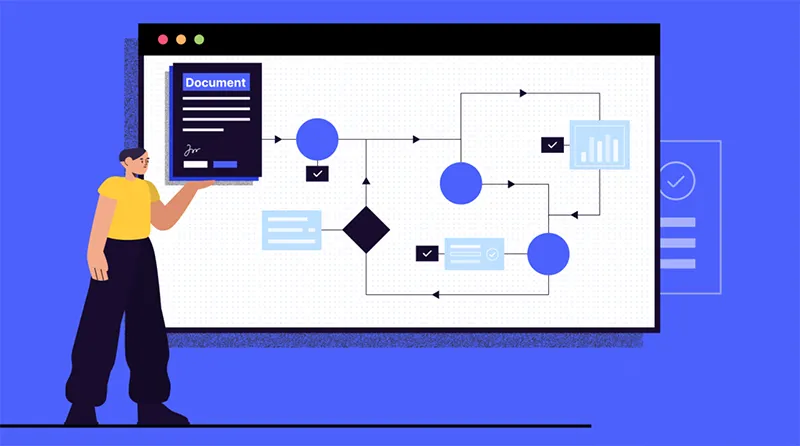
AI workflow management refers to the use of artificial intelligence technologies such as natural language processing (NLP), machine learning (ML), and robotic process automation (RPA) to design, automate, and monitor workflows across an organization.
Unlike traditional workflow management systems that rely on static rules, AI-powered workflows are dynamic, adaptive, and self-improving. They can learn from historical data, predict future outcomes, and adjust in real-time to optimize business performance.

For example:
- Instead of assigning support tickets manually, AI can route them automatically based on urgency, sentiment, and agent skill.
- Instead of requiring human approval for routine invoices, AI can auto-approve them while flagging anomalies.
- Instead of running generic marketing campaigns, AI can trigger hyper-personalized journeys based on customer behavior.
You may be interested AI Workflow Automation: Transforming Business Processes
Why AI Workflow Management Matters Today
The need for smarter workflows has never been greater. Companies are drowning in data, but still struggle with inefficiencies such as:
- Delays in communication between departments.
- Manual data entry errors.
- Difficulty in scaling operations without adding headcount.
- Poor visibility into process performance.

AI workflow management solves these problems by creating connected, intelligent, and automated ecosystems. Here are key reasons why it matters:
- Efficiency Gains – Automating repetitive tasks saves valuable time and allows employees to focus on higher-value work.
- Error Reduction – AI minimizes human errors in data handling, compliance, and approvals.
- Scalability – AI workflows can handle increasing workloads without proportional increases in staff.
- Agility – Businesses can quickly adapt to changing customer demands or market conditions.
- Cost Savings – Automating processes reduces operational costs significantly over time.
You may be interested The Future of AI Agentic Workflows
Key Components of AI Workflow Management
AI workflow management is not a single tool—it’s a combination of technologies and strategies working together. Some of the core components include:
Workflow Automation Engines. These systems map out processes (e.g., approvals, notifications, routing) and enable automation without manual intervention.
AI-Powered Decision-Making. Machine learning models analyze data patterns to recommend or execute decisions. For instance, AI can determine whether a loan application should be approved or flagged.

Robotic Process Automation (RPA). RPA bots handle repetitive, rule-based tasks such as data entry, report generation, and system integrations.
Natural Language Processing (NLP). NLP enables AI systems to understand, process, and respond to human language-useful for chatbots, email classification, or document analysis.
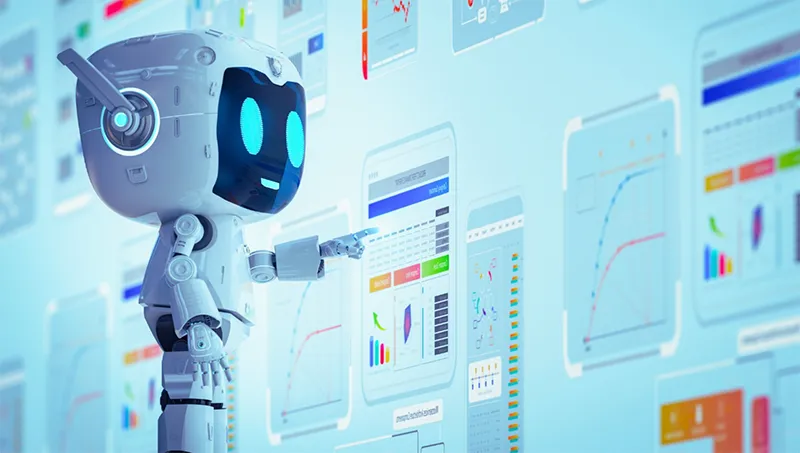
Analytics and Insights Dashboards. AI-driven dashboards provide real-time visibility into workflow performance, bottlenecks, and opportunities for optimization.
You may be interested AI powered workflow: Automation, Innovation, and Clinical Applications
Benefits of AI Workflow Management for Businesses
Improved Productivity
AI removes repetitive tasks from employee workloads, freeing up time for creativity and problem-solving.
Faster Decision-Making
AI can process data instantly, helping managers and executives make informed decisions quickly.
Better Customer Experience
By ensuring faster response times, personalized journeys, and fewer errors, AI enhances customer satisfaction.
Cost Optimization
Instead of hiring more staff to handle growing workloads, AI scales processes at a fraction of the cost.
Stronger Compliance and Risk Management
AI ensures rules and policies are followed consistently, and it flags anomalies before they escalate.
You may be interested An ai overview is not available for this search
Common Use Cases of AI Workflow Management
Customer Support Automation
- AI chatbots handle FAQs 24/7.
- Sentiment analysis prioritizes urgent issues.
- Workflows assign tickets to the right agents.

Marketing Campaign Orchestration
- AI segments customers based on behavior.
- Personalized campaigns trigger at the right time.
- Performance is monitored in real-time.
Finance and Accounting
- AI validates invoices automatically.
- Fraud detection workflows flag suspicious transactions.
- Financial reporting is automated.
HR and Employee Management
- AI screens resumes to shortlist candidates.
- Onboarding workflows automate document collection.
- Employee feedback is analyzed for retention strategies.
IT Operations
- AI predicts system failures and initiates fixes.
- Automated ticket routing improves response times.
- Security workflows monitor unusual activities.
You may be interested AI workflow builder: Choose the Best
AI Workflow Management vs. Traditional Workflow Systems
While traditional systems rely on predefined rules, AI brings adaptability and intelligence.
| Feature | Traditional Workflow | AI Workflow Management |
|---|---|---|
| Task Automation | Limited, rule-based | Dynamic, data-driven |
| Decision-Making | Human-dependent | AI-assisted or fully automated |
| Adaptability | Static | Continuously learning |
| Scalability | Manual scaling required | Automatic scaling |
| Insights | Basic reports | Predictive, real-time analytics |
Choosing the Right AI Workflow Management Tools
When selecting a platform, consider:
- Ease of integration with your existing systems.
- Scalability to handle future growth.
- User-friendly design for both technical and non-technical teams.
- Customization options to tailor workflows.
- Analytics and reporting capabilities.

Platforms like LikeFlow AI are emerging as strong solutions for businesses. With AI-driven workflow automation, customer interaction management, and advanced analytics, LikeFlow helps companies streamline operations while focusing on growth.
LikeFlow AI in AI Workflow Management
When discussing AI workflow management, one of the platforms that stands out is LikeFlow AI. Unlike generic workflow tools that only automate repetitive tasks, LikeFlow takes a holistic and AI-first approach to managing business operations. It is designed not just to improve efficiency, but also to empower teams with intelligence, adaptability, and actionable insights.
Centralized Workflow Automation
LikeFlow AI enables businesses to orchestrate all workflows from a single platform. From customer support and marketing campaigns to HR processes and IT operations, every workflow can be designed, automated, and monitored in one unified system. This eliminates silos and ensures seamless collaboration across departments.
AI-Powered Decision-Making
At the core of LikeFlow is machine learning and natural language processing. This allows the platform to analyze data, understand customer intent, and recommend decisions in real time. For example, support tickets can be routed intelligently to the right agent, or invoices can be approved automatically while anomalies are flagged for review.

Customer-Centric Automation
Customer experience is one of LikeFlow’s strongest use cases. By integrating chatbots, email automation, and sentiment analysis, LikeFlow ensures that businesses deliver fast, accurate, and personalized responses. Instead of overwhelming customer service teams, LikeFlow streamlines communication, prioritizes urgent cases, and boosts satisfaction.
Integration with Existing Tools
One of the biggest challenges with workflow management is connecting multiple platforms. LikeFlow AI is built with easy integration in mind, allowing businesses to connect with CRMs, ERPs, communication platforms, and data warehouses. This creates an ecosystem where data flows freely, and processes run without manual intervention.
Real-Time Analytics and Insights
LikeFlow does not stop at automation – it also provides advanced analytics dashboards. Managers gain full visibility into workflow performance, productivity trends, and customer engagement metrics. These insights help businesses identify bottlenecks, predict future outcomes, and continuously optimize their operations.
Scalability for Growing Businesses
As businesses scale, workflows often become more complex. LikeFlow AI ensures that companies can grow without operational bottlenecks. Whether it’s handling a surge in customer queries, processing thousands of transactions, or managing larger teams, LikeFlow adapts dynamically without requiring massive headcount increases.

Why Choose LikeFlow for AI Workflow Management?
- Ease of Use – Intuitive interface with no-code/low-code capabilities.
- AI-First Design – Every feature is optimized to leverage machine learning and NLP.
- Cross-Industry Applications – From finance and retail to SaaS and healthcare, LikeFlow adapts to multiple sectors.
- Future-Proof – Continuous improvements and AI-driven updates make it a long-term solution.
You may be interested AI workflow management
By adopting LikeFlow AI, businesses can transform their workflows from static, manual processes into intelligent, self-optimizing ecosystems. This not only reduces costs but also creates a competitive advantage in today’s fast-paced digital economy.
AI workflow management is no longer optional-it is essential for businesses aiming to stay competitive in the digital age. By leveraging AI to automate repetitive tasks, optimize decision-making, and improve customer experiences, companies can achieve unprecedented efficiency and scalability.
Whether you’re a small business seeking to streamline daily operations or a large enterprise managing complex processes, AI workflow management offers a clear path to sustainable growth.
A user-friendly AI platform that’s easy to deploy, helping SMEs automate processes, boost efficiency, and connect with customers naturally.
LIKEFLOW – Smarter AI, Faster Growth
- Phone : +1(719) 313 7576
- Email : support@likeflow.ai
- Address : 1942 Broadway St. STE 314C Boulder CO 80302


Leave a Reply