In the digital era, businesses are under constant pressure to do more with less. Organizations must manage increasing volumes of data, coordinate teams across multiple platforms, and deliver faster results without sacrificing quality. This is where AI workflow automation steps in. By combining the power of artificial intelligence with process automation, companies can eliminate repetitive tasks, reduce human error, and free up employees to focus on creative, high-value work.

In this article, we will explore what AI workflow automation is, why it matters, the industries where it is making the biggest impact, and the leading AI workflow automation tools that can reshape the way businesses operate. Whether you are a small business owner, a manager in a growing enterprise, or a decision-maker in a large corporation, understanding AI for workflow automation is key to staying competitive in today’s market.
You may be interested AI powered workflow: Automation, Innovation, and Clinical Applications
What is AI Workflow Automation?
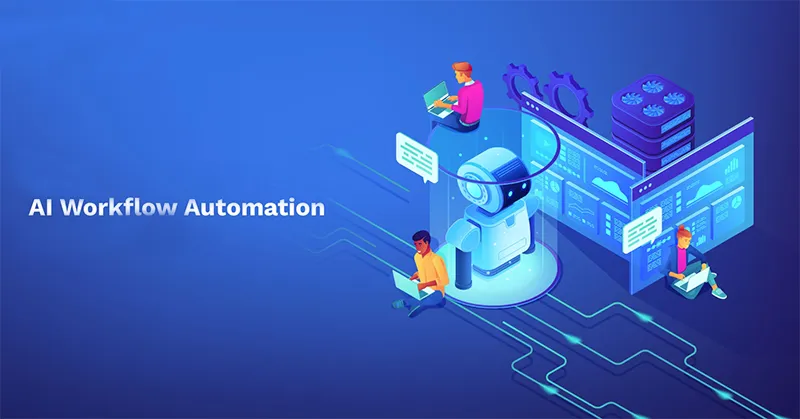
AI workflow automation is the process of using artificial intelligence to design, execute, and manage business workflows with minimal human intervention. Unlike traditional automation—where rules are manually set and only repeatable tasks can be handled—AI-powered automation leverages machine learning, natural language processing (NLP), and predictive analytics to adapt to new inputs, learn from data, and make intelligent decisions.
In simple terms, AI workflow automation is not just about doing things faster; it’s about doing them smarter.
For example:
- Instead of manually routing customer service tickets, an AI system can analyze the message, identify the sentiment, and automatically assign the case to the right department.
- Instead of manually checking invoices, AI can detect anomalies, match purchase orders, and flag suspicious activities.
This intelligent automation not only improves efficiency but also enhances accuracy and customer satisfaction.
You may be interested The Future of AI Agentic Workflows
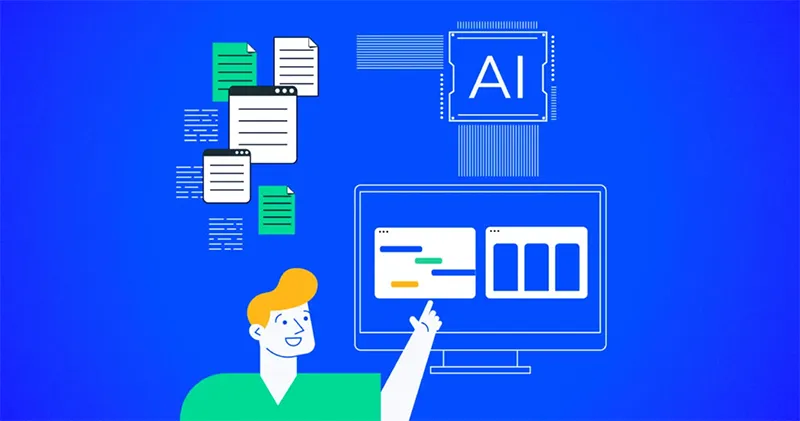
The Difference Between Traditional Automation and AI-Powered Automation
To fully understand the value of AI for workflow automation, it helps to distinguish it from traditional automation.
| Feature | Traditional Workflow Automation | AI Workflow Automation |
|---|---|---|
| Rules | Predefined, rigid | Adaptive, data-driven |
| Tasks | Repetitive, structured | Complex, semi-structured, unstructured |
| Learning | No self-improvement | Learns from historical data |
| Flexibility | Limited | Highly flexible |
| Examples | Macros, RPA scripts | Intelligent chatbots, predictive analytics, NLP-based decision-making |
While robotic process automation (RPA) can handle structured tasks such as data entry, AI workflow automation extends this capability by understanding language, predicting outcomes, and handling exceptions dynamically.
You may be interested AI workflow builder: Choose the Best
Why AI Workflow Automation Matters?
The rise of AI workflow automation tools is not just a passing trend; it is a strategic necessity. Businesses that embrace automation gain several critical advantages:
- Increased Productivity. By automating repetitive tasks, employees can focus on strategic activities such as innovation, relationship-building, and problem-solving.
- Cost Savings. AI reduces labor costs by minimizing manual intervention, decreasing error rates, and optimizing resource allocation.
- Better Accuracy and Compliance. AI can handle large datasets with precision, reducing errors in financial processes, compliance reporting, and customer communications.
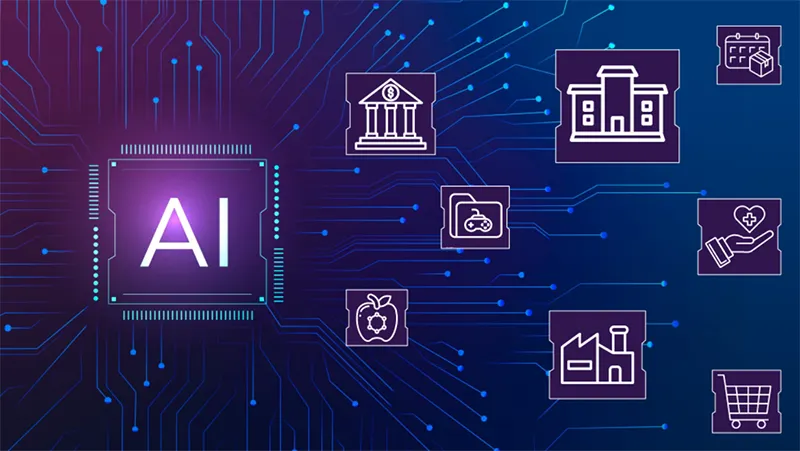
- Enhanced Customer Experience. AI-powered workflows can respond faster to customer queries, provide personalized recommendations, and ensure seamless service delivery.
- Scalability. Unlike human workers, AI systems can easily scale up operations without proportional increases in cost or effort.
You may be interested List of free llm models to use unlimited
Key Applications of AI for Workflow Automation
AI workflow automation is applicable across industries. Here are some common use cases where it delivers high value:
Customer Service
- AI chatbots resolve common queries instantly.
- Automated ticket routing ensures faster issue resolution.
- Sentiment analysis helps identify frustrated customers and escalate cases accordingly.
Finance and Accounting
- Invoice processing and reconciliation are automated.
- Fraud detection tools identify suspicious transactions.
- Automated reporting reduces compliance risks.
Human Resources
- Resume screening powered by AI speeds up recruitment.
- Onboarding workflows can be automated with personalized training modules.
- Employee engagement monitoring helps HR teams proactively address issues.

Marketing and Sales
- Lead scoring uses AI to prioritize prospects.
- Automated campaigns adapt to customer behavior in real time.
- Predictive analytics forecast future sales trends.
IT Operations
- Incident detection and response can be automated.
- System monitoring powered by AI predicts downtime.
- Cybersecurity workflows can automatically mitigate threats.
Supply Chain Management
- Demand forecasting improves inventory planning.
- Logistics automation reduces delivery delays.
- Supplier risk analysis ensures reliable operations.
You may be interested How to make ai chatbot: A Complete Guide
Benefits of AI Workflow Automation for Different Business Sizes
For Small Businesses
- Cost-effective scaling with limited staff.
- Streamlined customer service and marketing.
- Competitive edge against larger players.
For Medium Enterprises
- Improved inter-departmental coordination.
- Enhanced agility in adapting to market changes.
- Better decision-making through data-driven insights.

For Large Corporations
- Standardization of global operations.
- Advanced compliance monitoring across multiple jurisdictions.
- Strategic advantage in highly competitive markets.
You may be interested Ai search engine: Transforming How We Find Information
Challenges of AI Workflow Automation
While the potential is huge, implementing AI for workflow automation comes with challenges:
- Data Quality Issues – AI relies on clean, accurate data to function well. Poor data can lead to incorrect decisions.
- Integration Complexity – Connecting AI tools with legacy systems can be difficult.
- Employee Resistance – Some employees fear automation will replace jobs rather than support them.
- Cost of Implementation – AI workflow automation tools can be expensive to deploy and maintain.
- Ethical and Compliance Concerns – Ensuring AI follows ethical standards and regulatory requirements is essential.
Businesses must address these challenges with a clear strategy, proper training, and change management programs.

Top AI Workflow Automation Tools
When it comes to implementing AI workflow automation, choosing the right tool is crucial. Here are some of the leading AI workflow automation tools in 2025:
Likeflow with AI Workflow Automation
Likeflow with AI Workflow Automation is a modern tool that helps businesses streamline operations by combining simple workflow design with artificial intelligence. It stands out for its user-friendly interface, drag-and-drop workflow builder, and AI features like intelligent task routing, predictive insights, and smart data processing.
Compared to traditional automation tools, Likeflow is more adaptive, able to handle both structured and unstructured data, and provides real-time predictive insights. It works well for customer support, finance, HR, and marketing teams.

Pros:
- Easy to use, no coding required
- AI-powered decision-making
- Scalable for businesses of all sizes
- Wide integration options
Cons:
- Advanced features may require training
- Cost depends on usage and integrations
Verdict:
Likeflow is a strong choice for companies seeking an accessible yet powerful AI workflow automation tool to boost productivity and improve efficiency.
You may be interested AI Image Search: The Future of Visual Discovery
UiPath with AI Integration
A leader in robotic process automation, UiPath now integrates AI models for intelligent document processing, natural language understanding, and predictive analytics.
Zapier with AI Features
Zapier is widely known for connecting apps and automating tasks. With AI enhancements, it can now suggest automation workflows and adapt based on usage patterns.
Microsoft Power Automate (with AI Builder)
Microsoft integrates AI directly into its automation suite, allowing businesses to analyze forms, process images, and predict outcomes within workflows.
Automation Anywhere + IQ Bot
This platform uses AI-driven bots to handle semi-structured data, making it ideal for document-heavy workflows.
You may be interested AI workflow management
Make (formerly Integromat)
Make provides flexible automation across apps, enhanced by AI for intelligent decision-making and real-time process adaptation.
IBM Watson Orchestrate
Watson Orchestrate uses natural language commands to automate workflows, helping employees create automation without technical expertise.
Workato Intelligent Automation
Workato offers enterprise-level workflow automation with AI-powered integration, especially effective for IT and HR workflows.
You may be interested AI Voice Generators: Free Tools & the Best Options Over the Years
How to Implement AI Workflow Automation in Your Organization
To successfully adopt AI workflow automation, follow these steps:
Step 1: Identify Repetitive and High-Impact Processes
Start with workflows that are time-consuming, error-prone, or high-volume.
Step 2: Choose the Right AI Workflow Automation Tool
Select a platform that integrates well with your current systems and scales with your business.

Step 3: Start Small, Scale Gradually
Begin with a pilot project, measure its success, and expand automation step by step.
Step 4: Train Employees and Encourage Adoption
Provide training to employees and show how AI supports, not replaces, their roles.
Step 5: Monitor and Optimize Continuously
AI systems improve with feedback and data. Regularly monitor workflows and adjust to maximize efficiency.
You may be interested AI Chat Pro: The Smart AI Assistant
Challenges of AI Workflow Automation
While the potential is huge, implementing AI for workflow automation comes with challenges:
- Data Quality Issues – AI relies on clean, accurate data to function well. Poor data can lead to incorrect decisions.
- Integration Complexity – Connecting AI tools with legacy systems can be difficult.

- Employee Resistance – Some employees fear automation will replace jobs rather than support them.
- Cost of Implementation – AI workflow automation tools can be expensive to deploy and maintain.
- Ethical and Compliance Concerns – Ensuring AI follows ethical standards and regulatory requirements is essential.
Businesses must address these challenges with a clear strategy, proper training, and change management programs.
The Future of AI for Workflow Automation
The future of AI workflow automation is highly promising. As large language models (LLMs) like GPT-5 evolve, automation will move from simple task execution to full decision-making support. Businesses will increasingly rely on AI to:
- Interpret unstructured data such as emails, contracts, and voice recordings.
- Generate predictive insights for strategic decision-making.
- Enable hyper-personalized customer experiences.
- Automate cross-department workflows seamlessly.

In the long run, we may see “self-healing” workflows that automatically adapt to market changes, customer behavior, or internal disruptions without human intervention.
AI workflow automation is no longer a futuristic concept; it is a practical reality that is reshaping how businesses operate. By leveraging AI for workflow automation, organizations can streamline processes, enhance accuracy, and drive innovation across industries. With the growing number of advanced AI workflow automation tools, even small businesses can access powerful automation capabilities once reserved for large corporations.
A user-friendly AI platform that’s easy to deploy, helping SMEs automate processes, boost efficiency, and connect with customers naturally.
LIKEFLOW – Smarter AI, Faster Growth
- Phone : +1(719) 313 7576
- Email : support@likeflow.ai
- Address : 1942 Broadway St. STE 314C Boulder CO 80302




Leave a Reply