In today’s rapidly evolving digital landscape, preparing children for a future dominated by technology is paramount. Simply using smart devices is no longer enough; true future readiness requires understanding the underlying mechanics of Artificial Intelligence (AI). This is where AI games for kids emerge as a powerful, engaging educational tool. Blending the fun of interactive play with sophisticated machine learning concepts, these games transform passive screen time into active, meaningful learning experiences.
Whether through training a neural network to recognize drawings or solving puzzles using natural language processing, the best AI games for children are designed to build critical thinking and digital literacy from an early age. Our comprehensive guide will explore the immense value these platforms offer, including an essential look at the best and most accessible free AI games for kids available today.
Exploring the Educational Landscape of AI Games for Kids
The 21st century is defined by the rapid ascension of Artificial Intelligence. From the recommendation systems that shape our media consumption to the smart assistants managing our homes, AI is no longer a futuristic concept—it is a daily reality. For the youngest generation, AI is an intrinsic part of their digital world.
Recognizing this fundamental shift, educators and parents are increasingly looking to tools that foster AI literacy early on. At the forefront of this movement are AI games for kids, a dynamic new category of interactive entertainment that seamlessly blends play with essential technological education.
These games are more than just engaging apps; they are thoughtfully designed experiences where the principles of machine learning, neural networks, and computer vision are embedded into the gameplay itself. The goal is simple: to transform passive screen time into active, meaningful learning.

By interacting with AI, children develop a foundational understanding of this transformative technology, preparing them not just for future tech careers, but for a world where AI competence will be a universal necessity. Crucially, a wealth of high-quality options exists, particularly the many excellent and accessible free AI games for kids, which democratize this vital education.
You may be interested Platform vs application: Comprehensive analysis
Why AI Literacy Starts with Play?
The concept of AI literacy for children might sound overly complex, but it boils down to two simple ideas: understanding what AI is, and understanding what AI can do. Traditional education often lags behind technological innovation, but with AI, the stakes are too high for delay. Children who interact with AI games for kids are gaining a significant advantage by learning the how and why behind the technology they use every day.
The best way for children to internalize complex concepts is through hands-on engagement and experimentation. AI games provide the perfect sandbox environment. Instead of simply being told that a program can recognize a dog, children actively train the AI to recognize a dog, witnessing the process of machine learning firsthand. This experiential learning fosters not just knowledge, but a critical, questioning mindset about technology. They move from being mere consumers of AI to becoming curious co-creators.
Furthermore, these platforms address a crucial modern educational challenge: maintaining attention and motivation. By leveraging the principles of gamification—rewards, progress bars, interactive narratives—AI games keep children engaged far longer than traditional methods. The AI itself acts as a sophisticated, ever-present tutor, constantly adjusting the experience to meet the child’s exact needs, ensuring the lesson is never too easy to be boring nor too hard to be frustrating.
The Cognitive Power of AI Games
The benefits of engaging with AI games for kids extend far beyond simple tech knowledge; they contribute significantly to a child’s overall cognitive and creative development.
Personalized Learning at Scale
Perhaps the most transformative aspect of AI integration in educational play is the ability to offer truly personalized learning. Every child has a unique pace, learning style, and set of challenges. Historically, only one-on-one human tutoring could cater to this diversity. AI changes the equation. An AI-powered game tracks a child’s performance metrics in real-time—accuracy, response time, patterns of mistakes—and uses this data to instantly adapt the difficulty and content.
For instance, if a child struggles with fractions, the AI tutor within a game will introduce more interactive fractional puzzles, or perhaps switch the instructional method to a more visual approach, while a child excelling in geometry will be immediately challenged with advanced spatial reasoning problems. This dynamic adjustment ensures maximum efficiency and engagement, preventing the “one-size-fits-all” trap of traditional curriculum.
You may be interested Best ai stock trading bot free solutions
Enhancing Problem-Solving and Critical Thinking
The nature of many AI games for kids forces players to engage in higher-order thinking. In games where children are asked to “train” an AI, they are essentially performing fundamental data science. They must categorize inputs, identify biases, and troubleshoot errors. If the AI incorrectly guesses a drawing, the child has to analyze why the AI failed and adjust their input (their drawing) for better clarity.

This process cultivates:
- Algorithmic Thinking: Understanding that actions (input) lead to predictable, yet modifiable, outcomes (output).
- Error Analysis: Learning to identify and correct mistakes systematically, a core component of resilience and innovation.
- Logical Deduction: Applying rules to solve novel challenges presented by the adaptive AI opponent or partner.
Fostering Creativity through Generative AI
AI is not just about logic and data; it is increasingly a tool for boundless creativity. Generative AI, which can create original content like stories, images, or music, is now integrated into AI games for kids. These platforms act as creative collaborators, allowing children to become storytellers or artists without needing mastery of complex tools.
For example, an AI storytelling game acts as a co-author, using the child’s prompts and choices to generate the next part of the narrative, resulting in adventures that are truly unique and often hilariously unexpected. This encourages imaginative play, develops sophisticated narrative skills, and shows children how AI can be a powerful amplifier of human imagination.
Immediate and Targeted Feedback
In a traditional classroom, feedback on an assignment might take days. In AI games for kids, feedback is instantaneous. Whether it’s an AI tutor correcting pronunciation immediately after a mistake, or a game telling a child their strategy was ineffective right after a turn, this immediacy is a powerful learning accelerator. It prevents the reinforcement of bad habits and keeps the learning loop tight and effective, significantly boosting a child’s confidence and sense of progress.

A Spotlight on Free AI Games for Kids
A significant advantage in the current landscape is the accessibility of AI education. Numerous corporations and non-profits have developed outstanding, high-quality experiences that function as free AI games for kids, ensuring that financial constraints do not limit access to this crucial modern skill set. These platforms often leverage web-based technologies, requiring no special hardware and making them ideal for classrooms and home environments alike.
You may be interested Can you get banned from chat gpt
Google AI Experiments: Learning by Playing
Google has been a major contributor to the ecosystem of free AI games for kids through its AI Experiments initiative, making complex AI concepts consumable for young audiences.
Quick, Draw!
- The AI Concept: Machine Learning and Neural Networks (Image Recognition).
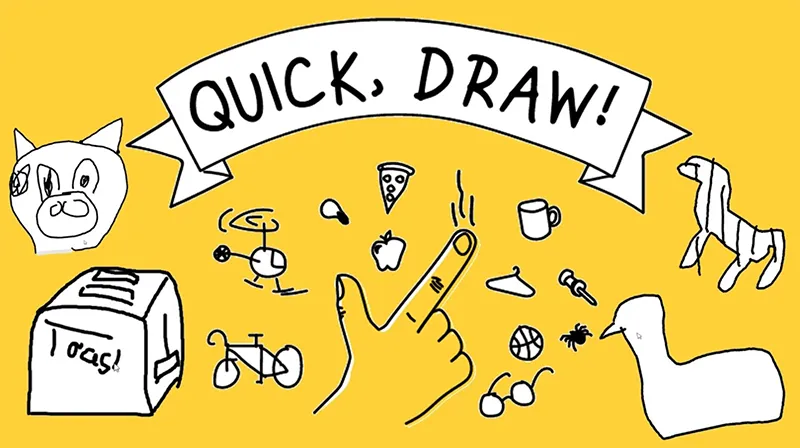
- The Game: Players are given a simple object (e.g., “draw a tennis racket”) and have a short timer to draw it. A neural network, trained on millions of previous drawings, attempts to guess the object in real-time.
- The Lesson: Children learn that AI “sees” the world not as humans do, but as a collection of shapes, lines, and patterns. They directly experience the training process: the more data (drawings) the AI receives, the smarter it becomes at generalizing and recognizing new images. This is a foundational, hands-on demonstration of how machine learning works.
Semantris
- The AI Concept: Natural Language Processing (NLP) and Semantic Association.
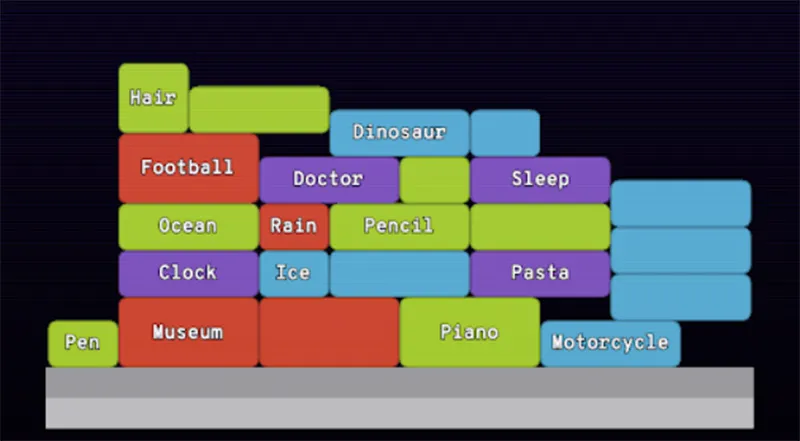
- The Game: This is a word-association game where players must type a word clue that is closely related to a target word on the screen. The AI uses its knowledge of language (its massive text corpus) to understand the relationship between the clue and the target, eliminating the corresponding block.
- The Lesson: Children gain an intuitive understanding of how AI comprehends language—not just by looking up definitions, but by understanding context and the relationship between words. It strengthens vocabulary, lateral thinking, and comprehension of linguistic nuances, making it an intellectually stimulating and free AI game for kids who enjoy language challenges.
Emoji Scavenger Hunt
- The AI Concept: Computer Vision and Object Detection.
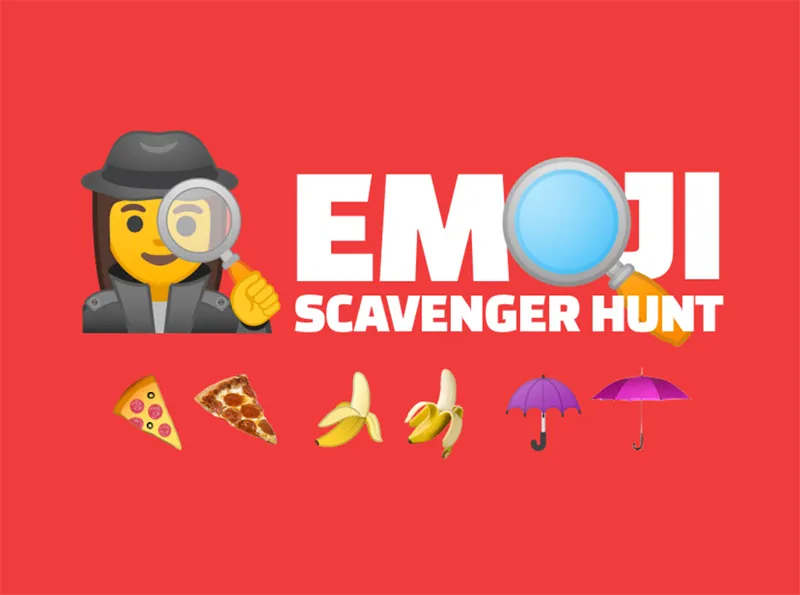
- The Game: The AI displays an emoji (e.g., a shoe) and players must rush to find a real-world object in their immediate environment that matches the emoji. They hold it up to their webcam, and the AI tries to identify it before the timer runs out.
- The Lesson: This physically engaging game demonstrates how AI uses a camera to ‘see’ and identify objects in a live video feed. It highlights the power and the limitations of computer vision and is an excellent, active example of free AI games for kids.
Code.org’s AI for Oceans: Ethics and Training Data
Another standout among the free AI games for kids is AI for Oceans from Code.org.
- The AI Concept: Data Classification, Bias, and Ethical AI.
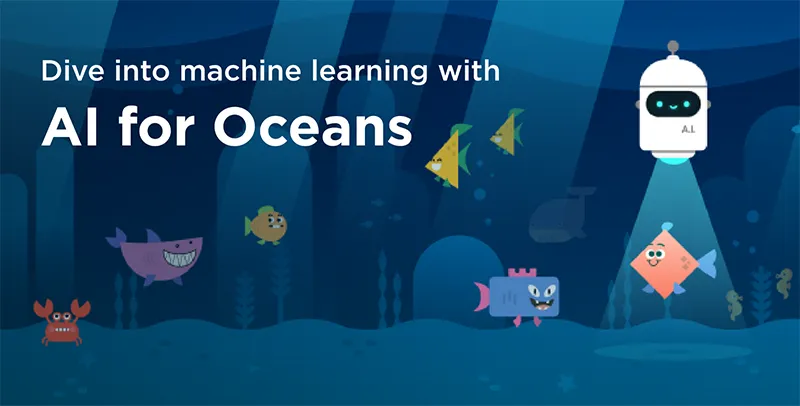
- The Game: Players help an underwater AI distinguish between fish and trash to clean the ocean. They provide the initial training data by manually labeling images. As the game progresses, the AI starts making predictions, and the children see how their initial training choices (the data they fed the AI) lead to accurate or biased outcomes.
- The Lesson: This game is invaluable for teaching the ethical dimension of AI. It clearly illustrates the principle of “Garbage In, Garbage Out.” If the initial training data is poor or biased, the AI will make mistakes, often with real-world consequences (like misclassifying a fish as trash). It introduces the concept of training an AI model, a skill that moves beyond simple playing to foundational programming.
You may be interested AI to buy and sell crypto (Suggested paid and free tools)
AI Tutors, Virtual Worlds, and Language Mastery
Beyond quick, web-based experiments, AI is also driving more comprehensive educational platforms, often with free entry points or distinct freemium models. These systems turn traditional subjects into personalized learning journeys.
The Role of Voice-Based AI Tutors
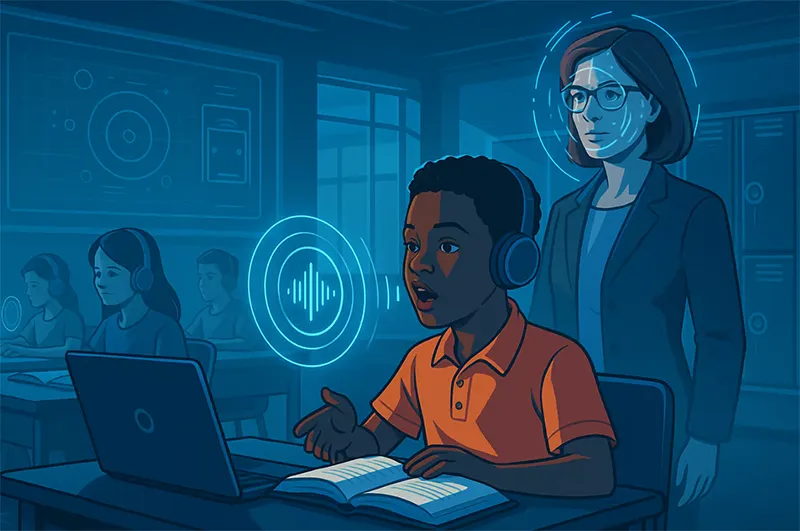
Voice-based AI applications, such as Buddy.ai, have revolutionized early childhood education, particularly for English as a Second Language (ESL).
- The AI Concept: Speech Recognition and Natural Language Generation (NLG).
- The Tool: Buddy, a friendly AI robot, engages children in interactive, voice-based conversations and lessons.
- The Benefit: The AI uses cutting-edge speech recognition to provide real-time, accurate feedback on pronunciation and vocabulary usage. If a child mispronounces a word, the AI doesn’t just offer the correct sound; it analyzes the error and adjusts the next lesson to provide targeted practice. This continuous, non-judgmental feedback loop is crucial for language acquisition and building speaking confidence.
Minecraft: Education Edition and AI Coding
While Minecraft itself isn’t exclusively an AI game, its Education Edition allows for seamless integration of AI and coding concepts, often accessible through school or district licenses. Using tools like the Code Builder, students can use block-based or Python programming to create AI agents that automate tasks within the game.
- The Concept: Automation, Algorithms, and Agent-Based AI.
- The Application: Students can program an AI agent to build a specific structure, harvest crops, or even navigate a complex maze. This exercise in teaching the “robot” how to solve a problem is a tangible way to understand algorithmic efficiency and the core logic behind AI-driven agents.
AI Dungeon and Generative Storytelling
For older children and teens, the interactive fiction game AI Dungeon offers a captivating look into generative AI. While it has premium features, the core experience remains available as one of the highly creative free AI games for kids and young adults.
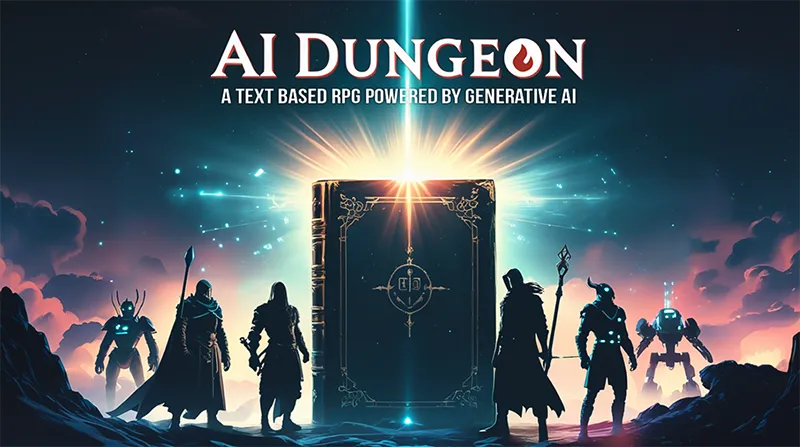
- The Concept: Large Language Models (LLMs) and Creative Generation.
- The Game: Players start a story with a simple prompt (e.g., “You are a knight entering a cave”). The AI acts as the dungeon master, generating the rest of the narrative based on the player’s choices and commands. The story is endless and completely unique every time.
- The Benefit: It’s a powerful demonstration of how sophisticated AI can be at understanding and generating human-like text, pushing the boundaries of creative writing and problem-solving within an infinitely evolving narrative world.
Guidance for Parents and Educators
While the value of AI games for kids is undeniable, a balanced approach is essential. AI games should supplement, not replace, traditional learning and human interaction.
- Prioritize Quality: Not all educational apps are created equal. Focus on games like the Google AI experiments or Code.org offerings that clearly articulate the AI concept being taught. The prevalence of free AI games for kids means parents can experiment to find high-quality, non-exploitative options.
- Monitor Screen Time: The highly engaging nature of AI games makes time limits necessary to maintain a balanced lifestyle that includes physical activity, reading, and non-digital social interaction.
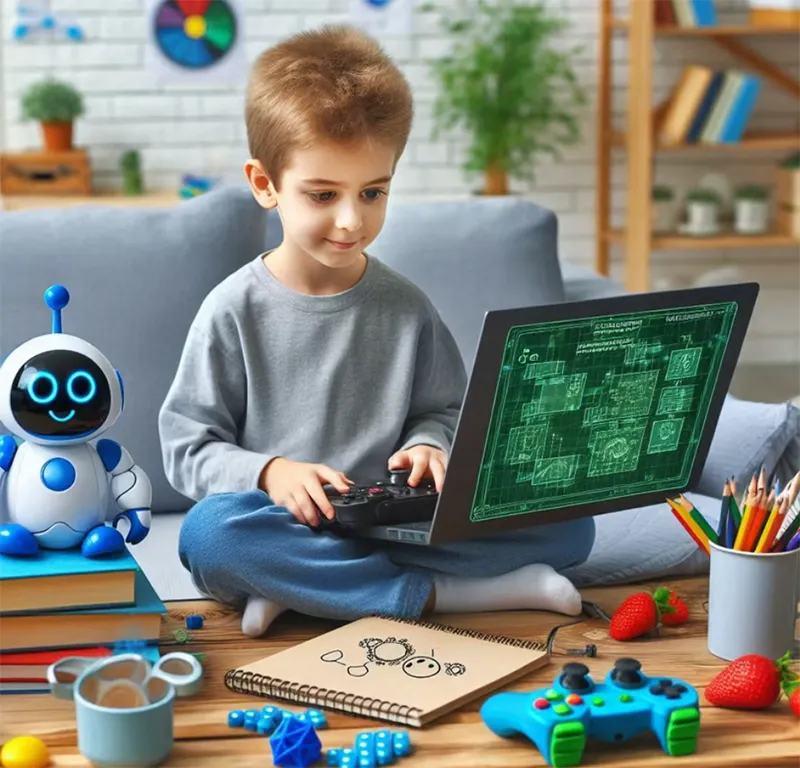
- Encourage Inquiry: The most valuable role for a parent or educator is to ask the why. After a child plays Quick, Draw!, ask: “Why do you think the robot couldn’t guess your drawing? How could you have drawn it differently so the AI would understand?” This pushes the child from simply playing the game to actively analyzing the underlying AI logic.
- Emphasize Human Connection: While AI tutors are excellent for practice, they do not replace the nuanced social and emotional development gained from interacting with human peers and mentors.
The integration of Artificial Intelligence into children’s play represents a pivotal moment in education. AI games for kids are transforming how the next generation learns, thinks, and interacts with technology, moving the concept of AI literacy from an academic goal to an accessible, joyful reality. By leveraging adaptive difficulty, instantaneous feedback, and creative generative tools, these games are preparing children with the cognitive, technical, and ethical foundations needed for a future where AI is pervasive.
The widespread availability of exceptional resources, particularly the free AI games for kids, ensures that this critical education is available to all, making the pathway to technological understanding a matter of curiosity, creativity, and play. The future is being built today, one engaging, AI-powered game at a time.
A user-friendly AI platform that’s easy to deploy, helping SMEs automate processes, boost efficiency, and connect with customers naturally.
LIKEFLOW – Smarter AI, Faster Growth
- Phone : +1(719) 313 7576
- Email : support@likeflow.ai
- Address : 1942 Broadway St. STE 314C Boulder CO 80302


Leave a Reply