For decades, businesses relied on foundational technologies—from mainframes to enterprise resource planning (ERP) systems—to streamline their processes. Today, however, a new, more dynamic force is driving the next wave of productivity and competitive advantage: AI automation services for businesses. This is not merely an incremental upgrade; it represents a fundamental paradigm shift from simple mechanization to genuine, intelligent autonomy.

Introduction: The Dawn of the Autonomous Enterprise
The term AI automation refers to the use of Artificial Intelligence (AI) technologies, primarily Machine Learning (ML) and Natural Language Processing (NLP), to automatically execute complex business processes that once required human intervention, decision-making, and critical thinking.
Unlike traditional Robotic Process Automation (RPA), which typically mimics pre-defined, rule-based human actions, AI automation solutions can learn from data, adapt to changing scenarios, and make sophisticated, context-aware judgments. This ability to handle unstructured data, ambiguous instructions, and dynamic environments is what unlocks unprecedented levels of operational fluidity and resource optimization for modern enterprises.
You may be interested Why Marketing Automation Platforms Matter

The imperative for businesses to adopt these services has never been clearer. Global markets are characterized by hyper-competition, rising labor costs, and the relentless pressure to deliver faster, more personalized customer experiences. To thrive, organizations must break free from the constraints of manual, repetitive, and error-prone tasks that consume valuable human capital.
When a company adopts a comprehensive AI automation platform, they are essentially building an intelligent “digital workforce” capable of operating 24/7 with near-perfect accuracy. This digital workforce is not designed to replace humans entirely, but rather to augment them, freeing up their time for strategic, creative, and complex problem-solving activities—the very tasks that generate true business value.
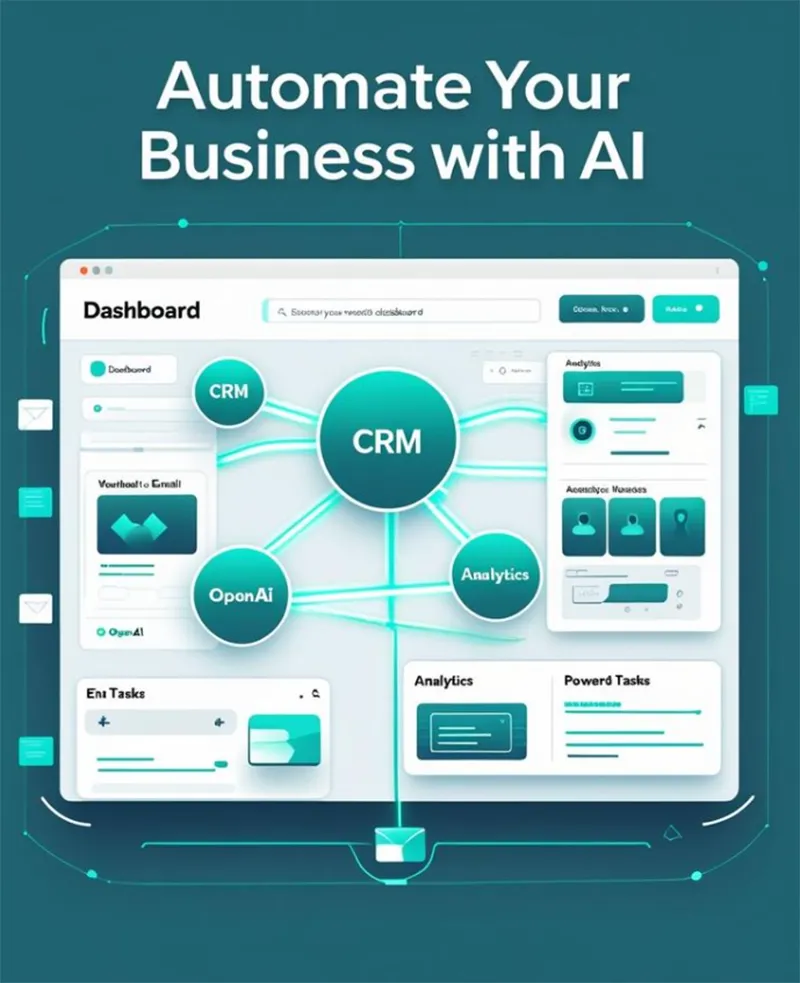
Consider the sheer volume of data being generated daily. No human workforce, regardless of size, can effectively process, analyze, and act upon terabytes of information across various silos, from email inboxes and customer relationship management (CRM) systems to supply chain logistics platforms.

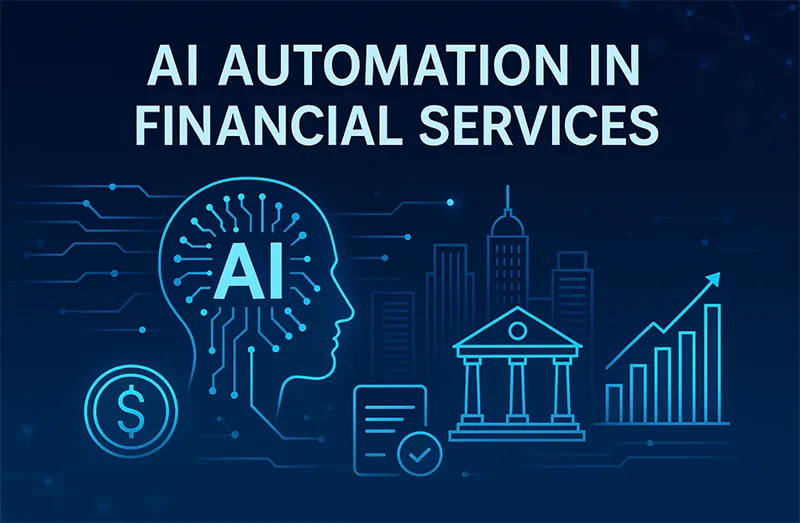
AI automation services are specifically engineered to tackle this complexity. They aggregate data, identify patterns, flag anomalies, and initiate corrective actions—all in real-time. For instance, an automated system can process thousands of financial transactions overnight, flagging suspicious activity with a precision that far exceeds manual auditing.
The economic and strategic benefits are compelling enough to warrant immediate action. A successful AI automation strategy promises significant reductions in operational expenditure (OpEx), often yielding rapid Return on Investment (ROI). More critically, it embeds resilience into the core operations. By eliminating human error, guaranteeing compliance adherence, and ensuring round-the-clock process execution, businesses gain a robust competitive edge.

This is not about being faster at doing the same things; it’s about fundamentally reshaping the business model to be more agile, scalable, and relentlessly customer-focused. For any enterprise seeking to survive and lead in the 21st century, embracing intelligent AI automation solutions is no longer optional—it is the prerequisite for building the autonomous enterprise.
You may be interested Marketing automation software: The Ultimate Guide (TOP 9+)
Types of AI Automation Services
Businesses can choose from a variety of AI automation solutions, each tailored to specific needs and goals:
- Robotic Process Automation (RPA): Automates repetitive, rule-based tasks such as data entry, form filling, or invoice management.
- Machine Learning Automation: Uses data-driven algorithms to learn and improve over time — ideal for fraud detection, recommendation systems, and predictive modeling.
- Natural Language Processing (NLP): Powers AI chatbots and voice assistants to handle customer interactions and improve communication efficiency.
- Enterprise Automation: Combines AI with existing business processes to create seamless, cross-departmental workflows.
- Predictive Analytics & Insights: Helps businesses forecast trends, anticipate customer needs, and make smarter decisions.

- Document Automation: Streamlines document workflows such as contracts, reports, and invoices for greater accuracy and compliance.
“Think big, start small, and scale fast … ‘IA is a business transformation, not a technology project’ … ‘IA is a journey, not a destination’.” — Pascal Bornet, Intelligent Automation
You may be interested Best software for automating customer service with ai
Key Business Applications
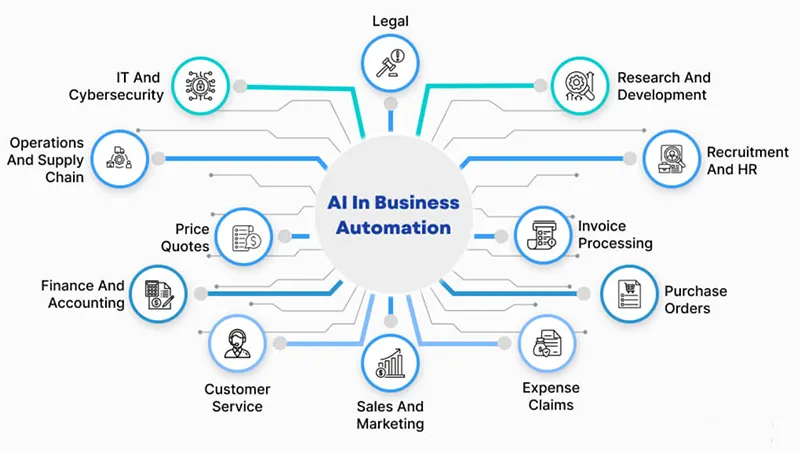
AI automation services for businesses bring value to nearly every department:
- Customer Support: AI-powered chatbots deliver instant, 24/7 assistance, answering common questions and resolving issues efficiently.
- Sales and Marketing: Automates lead generation, scoring, personalized outreach, and campaign management.
- Finance: Simplifies invoicing, payroll processing, and expense management with minimal human error.

- Human Resources: Automates recruitment, onboarding, and employee performance tracking.
- Operations: Enhances project management, optimizes inventory control, and ensures real-time reporting and analytics.
“There’s a lot of automation that can happen that isn’t a replacement of humans, but of mind-numbing behaviour.” — Stewart Butterfield, Slack Co-Founder
How to Choose the Right AI Automation Service
Selecting the right AI automation provider is crucial for long-term success. Here’s what to consider:
- Assess Your Business Needs: Identify repetitive tasks or data-heavy processes that could benefit from automation.
- Prioritize Customization: Look for a provider that offers flexible integration with your current tools — such as CRM or ERP systems.
- Choose the Right Approach: Depending on your technical capacity, opt for no-code AI automation tools or fully custom AI solutions.

- Evaluate the Provider: A reliable provider should offer consultation, implementation, and ongoing support to ensure smooth adoption and scalability.
“The first rule of any technology used in a business is that automation applied to an efficient operation will magnify the efficiency. The second is that automation applied to an inefficient operation will magnify the inefficiency.” — Bill Gates
You may be interested AI automation for financial services: Transforming the Future of Finance
Implementation and Adoption: A Practical Roadmap
The transition to incorporating AI automation services is a strategic endeavor, not just a technical deployment. A successful implementation requires careful planning, disciplined execution, and a phased approach that prioritizes processes with the highest potential for impact. Rushing the adoption of AI automation platforms can lead to sunk costs and system failures. This section provides a practical, step-by-step roadmap for organizations ready to begin their intelligent automation journey.
Identifying High-Value, Low-Complexity Processes for Initial Automation
The first, and most critical, step is deciding what to automate. Businesses should resist the temptation to automate the most complex processes immediately. Instead, they should focus on achieving quick wins to build momentum, demonstrate ROI, and gain internal buy-in. The ideal candidates for initial automation share these characteristics:
- Rule-Based and Repetitive: The process follows a clear sequence of steps, such as data entry, form processing, or system logging.
- High Volume and Frequency: Tasks that are performed numerous times a day, week, or month, ensuring that automation provides a rapid return on time invested.
- Low Exception Rate: The process rarely deviates from its standard path, minimizing the need for complex AI decision-making initially.
- Data Consistency: The input data is relatively structured and consistent, allowing the AI automation solution to be trained efficiently.

Examples include processing employee expense reports, running daily system health checks, or automatically generating standard customer confirmation emails. This measured approach allows the organization to refine its automation skills before tackling mission-critical, high-complexity systems powered by advanced Machine Learning.
You may be interested AI services for metadata management automation: Revolutionizing Data Governance and Discovery
Choosing the Right AI Automation Solution Provider
The market for AI automation services is vast, encompassing everything from broad enterprise suites to specialized, niche tools. Selecting the right provider is crucial for long-term success. Key considerations during the vendor selection process include:
- Integration Capability: Does the platform integrate seamlessly with your existing IT infrastructure (ERP, CRM, HRIS)? A tool that operates in isolation will create more data silos, defeating the purpose of end-to-end automation.
- Scalability and Flexibility: Can the solution handle your current automation needs, but also scale effortlessly as you expand your use of AI? Does it support a blend of technologies (e.g., RPA, NLP, ML) to evolve into a full Intelligent Automation (IA) platform?

- Ease of Use and Maintenance (Citizen Developer Focus): Look for low-code or no-code platforms. The best AI automation platforms allow subject matter experts—not just IT specialists—to build and maintain basic automation bots, fostering a culture of innovation across the organization.
- Support and Training: Evaluate the provider’s track record for supporting deployment and providing resources to upskill your internal teams.
Data Preparation and Governance: The Fuel for AI
AI runs on data. The effectiveness of any AI automation service is directly correlated with the quality, cleanliness, and accessibility of the data used to train its models. No amount of sophistication in the algorithm can overcome “garbage in, garbage out.”
- Data Cleansing and Standardization: Before deployment, organizations must ensure that data is accurate, complete, and uniformly formatted across different systems. Data standardization is paramount for ML algorithms to learn correctly.

- Data Governance Frameworks: Establish clear policies for data privacy, security, and access rights. When automating processes that handle sensitive customer or financial information, compliance is non-negotiable. Governance ensures that automation adheres to regulations like GDPR or HIPAA.
- Creating a Data Pipeline: Build a structured pipeline where data is consistently collected, stored, and fed into the AI automation solutions. This reliable feed ensures that the AI models are always learning from the freshest, most relevant information, maintaining high performance and accuracy over time.
You may be interested AI marketing automation
By treating the implementation as a structured program—starting small, selecting the right partner, and prioritizing data excellence—businesses can systematically realize the strategic value promised by AI automation services for businesses.
A user-friendly AI platform that’s easy to deploy, helping SMEs automate processes, boost efficiency, and connect with customers naturally.
LIKEFLOW – Smarter AI, Faster Growth
- Phone : +1(719) 313 7576
- Email : support@likeflow.ai
- Address : 1942 Broadway St. STE 314C Boulder CO 80302



Leave a Reply