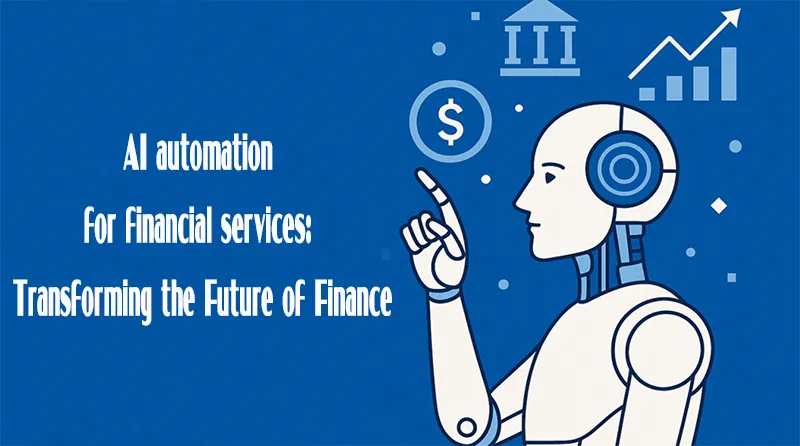
The financial services industry is currently at the nexus of technological revolution, where traditional operational models are being decisively supplanted by intelligent, data-driven systems. At the heart of this transformation is AI automation for financial services, a pivotal concept that is fundamentally redefining efficiency, risk management, and customer engagement across banking, insurance, and wealth management.
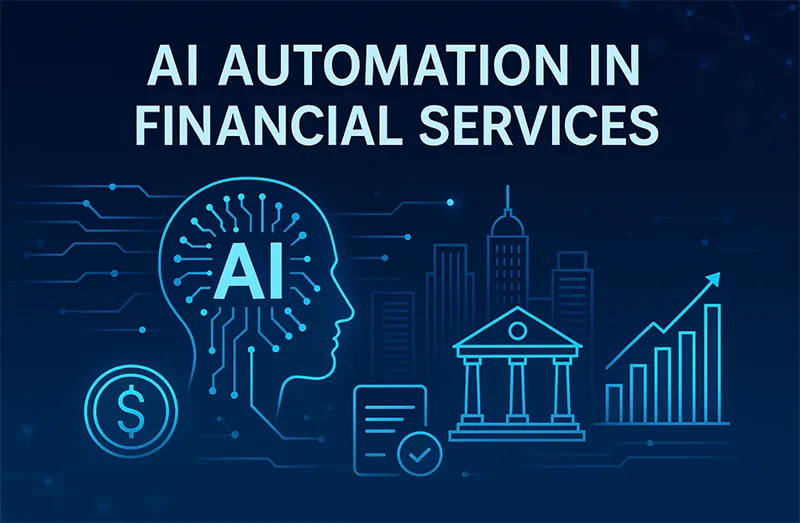
This shift is not merely an incremental improvement; it represents a paradigm leap toward hyper-personalized, secure, and instantaneous financial operations, driven by sophisticated Artificial Intelligence and Machine Learning algorithms. The adoption of AI automation is no longer a competitive advantage but a core requirement for survival and growth in a rapidly evolving global market.
The Imperative for AI in Financial Services
Financial institutions operate under intense pressure from increasing regulatory scrutiny, fierce competition from fintech startups, and mounting customer demands for instant, high-quality service. AI automation for financial services addresses these challenges directly by streamlining complex, repetitive, and data-intensive tasks.
Efficiency and Cost Reduction – AI and Machine Learning (ML) algorithms can process vast amounts of data – from transaction records to customer communications- at speeds and scales impossible for human employees. This automation drastically reduces the time and cost associated with routine operations such as data entry, compliance checks, and customer support.
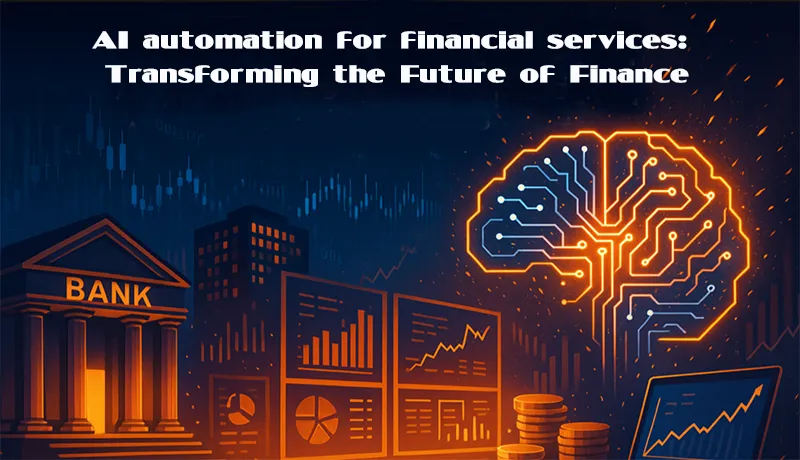
Enhanced Accuracy and Risk Management – Human error is an unavoidable risk in finance. AI systems, conversely, perform tasks with near-perfect consistency. In risk management, AI models can identify subtle anomalies and complex patterns indicative of fraud or market risk far earlier and more reliably than traditional methods.
Improved Customer Experience – Today’s customers expect personalized and immediate service. AI tools, such as chatbots and predictive analytics, enable financial firms to offer 24/7 support and anticipate customer needs, tailoring product offerings and advice accordingly.
You may be interested Why Marketing Automation Platforms Matter
Key Areas of AI Automation in Finance
The application of AI automation spans the entire value chain of the financial services industry.
Customer-Facing Automation
Intelligent Chatbots and Virtual Assistants: These tools handle a significant volume of customer inquiries, from checking balances to processing simple transactions. They ensure instant service availability and free up human agents for more complex, high-value interactions.
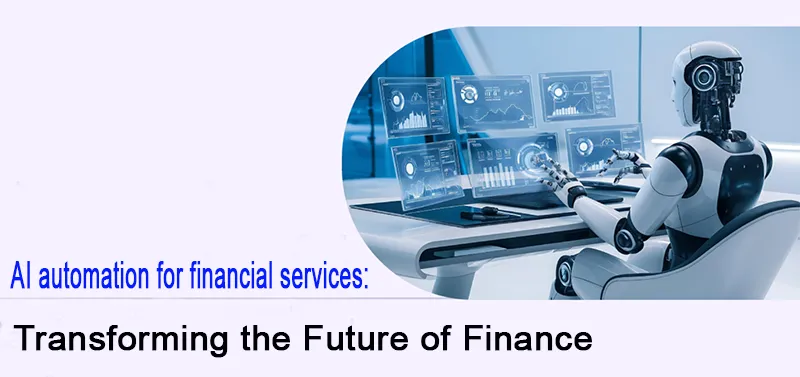
Personalized Recommendation Engines: Leveraging predictive analytics, AI assesses a customer’s financial health, spending habits, and life stage to recommend appropriate products (e.g., specific mortgage options, savings plans, or insurance coverage).
Back-Office and Operational Automation
Robotic Process Automation (RPA) and Hyper-automation: RPA bots are used to automate high-volume, rules-based tasks like data migration, report generation, and processing know-your-customer (KYC) documentation. Hyper-automation, combining RPA with ML and Natural Language Processing (NLP), extends automation to more complex decision-making processes.
Loan and Underwriting Automation: AI accelerates the loan approval process by instantly verifying applicant data, assessing creditworthiness, and calculating risk profiles. This dramatically shortens the time-to-decision, offering a superior customer experience.

Risk, Compliance, and Security Automation
Anti-Money Laundering (AML) and Fraud Detection: AI systems are the best AI solutions for financial services automation in the realm of security. ML algorithms analyze transaction streams in real-time, flagging suspicious activities that deviate from learned normal behavior. They are superior to rule-based systems because they can detect novel forms of financial crime.
Regulatory Compliance: NLP and Machine Learning are used to automatically monitor and interpret regulatory changes, ensuring internal policies and documentation remain compliant. This significantly reduces the burden of manual compliance checks and minimizes the risk of costly penalties.
You may be interested Best software for automating customer service with ai

Best AI Solutions for Financial Services Automation
As the technology matures, financial institutions are prioritizing sophisticated, integrated AI platforms. By 2025, the focus will be on solutions that offer end-to-end automation and deep learning capabilities.
You may be interested Marketing automation software: The Ultimate Guide (TOP 9+)
| Solution Category | Key Technologies | Impact on Financial Services |
| Hyper-automation Platforms | RPA, ML, NLP, Computer Vision | End-to-end process automation, connecting front, middle, and back offices. |
| Advanced Fraud & Risk Analytics | Deep Learning, Graph Databases, Behavioral Biometrics | Real-time, highly accurate detection of sophisticated financial crime (e.g., synthetic identity fraud). |
| Cognitive Compliance Tools | NLP, Text Analytics, Knowledge Graphs | Automated regulatory change management, policy adherence, and contract analysis. |
| Conversational AI & Digital Employees | LLMs (Large Language Models), Contextual AI | Highly intelligent and empathetic customer service, capable of resolving complex queries. |
| AI-Driven Wealth Management (Robo-Advisors) | Predictive Modeling, Portfolio Optimization Algorithms | Personalized, automated investment advice and portfolio rebalancing at scale. |
| Emerging Niche AI Platforms | Modular AI, Rapid API Integration | Address specific pain points (e.g., Likeflow AI can offer deep automation for a narrow business process like invoice reconciliation or loan approval, providing fast deployment speed and rapid ROI). |
The Rise of Large Language Models (LLMs)
A significant trend leading up to 2025 is the integration of LLMs (like GPT-4 and similar proprietary models) into core financial processes. These models are the best AI solutions for financial services automation in document-heavy domains. They can summarize complex legal documents, draft compliance reports, and enhance code generation, dramatically speeding up development cycles and reducing the time spent on reading and synthesizing unstructured data.

As AI makes critical decisions (e.g., loan approvals, fraud flagging), the demand for Explainable AI (XAI) is paramount. Financial regulators require transparency. The best AI solutions for financial services automation 2025 will therefore be those that not only deliver high performance but also provide clear, understandable rationales for their decisions, ensuring fairness and auditability, particularly in lending and hiring.
You may be interested Best software for automating customer service with ai
Implementation Challenges and the Path Forward
Despite the immense benefits, the journey toward full AI automation for financial services is not without hurdles.
- Data Governance and Quality
AI models are only as good as the data they are trained on. Financial institutions must overcome challenges related to data silos, legacy systems, and ensuring the quality, security, and privacy of sensitive customer data (a core requirement of GDPR, CCPA, etc.).
- Talent Gap and Change Management
The deployment of best AI solutions for financial services automation requires a workforce skilled in data science, ML engineering, and cloud architecture. Furthermore, successful AI adoption relies on effective change management—reskilling existing employees to work alongside their AI counterparts rather than fearing replacement.
- Regulatory and Ethical Oversight
Regulators are still catching up to the speed of AI deployment. Financial firms must proactively manage algorithmic bias, ensuring that AI-driven decisions do not unfairly disadvantage certain demographic groups, a crucial ethical consideration.
You may be interested AI automation services for businesses: How Artificial Intelligence is Transforming Operations
Implementation Roadmap: Executing AI Automation for Financial Services
Successfully deploying AI automation for financial services requires a strategic, phased approach that moves beyond simple proof-of-concept projects to scalable, enterprise-wide integration. This roadmap outlines the key steps financial institutions must follow to realize the full benefits of their AI investments.
Phase 1: Strategy, Assessment, and Foundation (The “Why” and “Where”)
The initial phase focuses on defining scope, establishing the technological foundation, and ensuring organizational readiness.
The initial phase focuses on defining scope, establishing the technological foundation, and ensuring organizational readiness.

Identify High-Value Use Cases: Don’t automate everything at once. Focus on processes that are high-volume, repetitive, rules-based, and have a direct impact on regulatory risk or customer satisfaction.
Examples: KYC/AML document processing, credit application scoring, or high-frequency customer query routing.
Conduct Data Readiness Assessment: AI is data-hungry. Institutions must audit their data infrastructure to assess data quality, accessibility, governance, and security protocols. This involves breaking down data silos and standardizing data formats.
Establish an AI Governance Framework: Before deployment, create clear policies regarding Explainable AI (XAI), algorithmic bias detection, data privacy (e.g., GDPR, CCPA compliance), and audit trails. This ensures ethical and regulatory adherence from day one.

Build the Cloud/Tech Stack: Invest in scalable, flexible cloud infrastructure (public, private, or hybrid) that can handle the computational demands of Machine Learning models and integrate seamlessly with legacy core banking systems.
Phase 2: Pilot, Build, and Testing (The “How”)
This phase involves the actual development, rigorous testing, and initial deployment of the selected AI solutions.
Develop and Train Models: Use clean, labeled historical data to train the AI/ML models (e.g., fraud detection algorithms, NLP-powered document processors). Prioritize robust testing to ensure accuracy and minimize “false positives” (a critical issue in fraud and compliance).
Integrate with Existing Systems: This is often the most complex step. Use APIs and middleware to connect the new AI solutions (like a hyper-automation platform or a specialized tool such as Likeflow AI) with core banking systems, CRM, and ERP. Ensure data flow is seamless and bidirectional.

Run Proof-of-Concept (PoC) and Pilots: Deploy the AI solution in a controlled, non-critical environment first, ideally running in parallel with the manual process. Measure key performance indicators (KPIs) like processing time, error rate, and cost reduction against the manual baseline.
Implement Human-in-the-Loop (HIL) Mechanisms: Design workflows where complex or uncertain decisions made by the AI are flagged for review by a human expert. This maintains control, builds trust, and provides continuous feedback for model refinement.
Phase 3: Scaling, Optimization, and Change Management (The “Sustain”)
The final phase focuses on expanding the successful pilot across the enterprise and preparing the workforce for the new automated reality.
Scale and Industrialize: Once a pilot demonstrates measurable ROI and stability, begin rolling it out to other departments or branches. Prioritize standardization and reusable automation components to accelerate scaling.

Establish Continuous Monitoring and Retraining: AI models degrade over time due to concept drift (changes in underlying data patterns, e.g., new fraud techniques). Set up automated monitoring to check model performance daily, and schedule regular retraining cycles to maintain accuracy and relevance, especially for solutions handling market data or evolving regulatory requirements.
Invest in Upskilling and Reskilling: Address the talent gap by training existing staff. Focus on moving employees from performing repetitive tasks to becoming “automation managers,” data scientists, or customer relationship experts. Successful change management is vital to overcome resistance to automation.
Measure Enterprise-Wide Impact: Continuously track high-level metrics (e.g., operational cost per transaction, first-call resolution rate, time-to-market for new products) to quantify the strategic value of AI automation for financial services and inform the next wave of initiatives.
You may be interested AI services for metadata management automation: Revolutionizing Data Governance and Discovery

Frequently Asked Questions (FAQs) about AI Automation in Finance
Q1: What is the main difference between RPA and AI in financial services?
A: Robotic Process Automation (RPA) is a rules-based technology designed to automate structured, repetitive, high-volume tasks that follow specific, predetermined steps (e.g., data entry, form filling). AI automation, which includes Machine Learning (ML) and Natural Language Processing (NLP), is used for cognitive tasks. AI can handle unstructured data, learn from experience, make predictions, and handle exceptions (e.g., advanced fraud detection, document analysis, personalized customer service). Modern hyper-automation platforms combine both RPA and AI.
Q2: How does AI improve compliance and Anti-Money Laundering (AML) efforts?
A: AI significantly enhances compliance by moving beyond static, rule-based systems. For AML, ML algorithms can analyze billions of transactions to identify complex, non-obvious patterns indicative of money laundering (“typologies”) that human analysts or simple rules would miss. NLP tools automatically read and summarize regulatory documents, ensuring that internal policies are immediately updated to remain compliant, which is crucial for reducing regulatory risk.
Q3: What is the biggest challenge financial institutions face when implementing AI?
A: The biggest challenge is often data quality and governance. AI models rely on vast amounts of clean, labeled, and unified data. Many financial institutions struggle with fragmented data stored in siloed, legacy systems. Overcoming this requires significant investment in data infrastructure, standardization, and strict data privacy protocols to ensure models are trained fairly and accurately.
Q4: Will AI automation lead to mass job losses in the finance sector?
A: While AI automation certainly eliminates many repetitive, manual tasks in the back and middle offices, the consensus suggests a shift in roles rather than mass elimination. AI creates demand for new, higher-value positions: AI governance specialists, data scientists, ‘bot builders,’ and human experts focused on complex client relationships and decision-making (Human-in-the-Loop). The workforce needs to be reskilled to manage and collaborate with AI systems.

Q5: What is Explainable AI (XAI) and why is it critical for finance by 2025?
A: Explainable AI (XAI) refers to methods and techniques that allow human users to understand and trust the results and output of machine learning algorithms. It is critical for finance by 2025 because regulatory bodies demand transparency, especially in high-stakes decisions like credit scoring, loan approvals, or fraud flagging. Financial institutions must be able to audit and explain why an AI model made a particular decision to ensure fairness, prevent bias, and comply with anti-discrimination laws.
Q6: How quickly can a financial institution see ROI from AI automation?
A: Initial ROI from simple RPA and AI automation for financial services (like automating accounts payable or customer FAQs) can be seen within 6 to 12 months, primarily through operational cost savings. However, the largest, strategic ROI from predictive AI (e.g., personalized product recommendation, advanced risk modeling) typically takes 18 to 36 months as models are fine-tuned, integrated, and scaled across the enterprise.
You may be interested AI marketing automation
AI automation for financial services is fundamentally reshaping how institutions operate, mitigate risk, and interact with customers. By strategically adopting the best AI solutions for financial services automation, including hyper-automation, advanced LLMs, and explainable risk models, financial firms can unlock unparalleled levels of efficiency, security, and personalization. The future of finance is intelligent, automated, and centered on providing seamless value to the customer. Institutions that embrace this transformation will be the leaders of tomorrow. Hope this article will be useful for you.
A user-friendly AI platform that’s easy to deploy, helping SMEs automate processes, boost efficiency, and connect with customers naturally.
LIKEFLOW – Smarter AI, Faster Growth
- Phone : +1(719) 313 7576
- Email : support@likeflow.ai
- Address : 1942 Broadway St. STE 314C Boulder CO 80302




Leave a Reply